


SLAM remains committed to advancing projects across multiple markets that demonstrate how the built environment can actively promote both human health and environmental responsibility. As institutions place greater emphasis on mental and physical wellbeing, equitable access, and long-term resilience, design has become essential infrastructure, not an amenity. Through high-performance systems, human-centered planning, and strategies that prioritize dignity, connection, and sustainability, the following projects illustrate a holistic vision of wellness – one that supports people, strengthens communities, and preserves resources for generations to come.
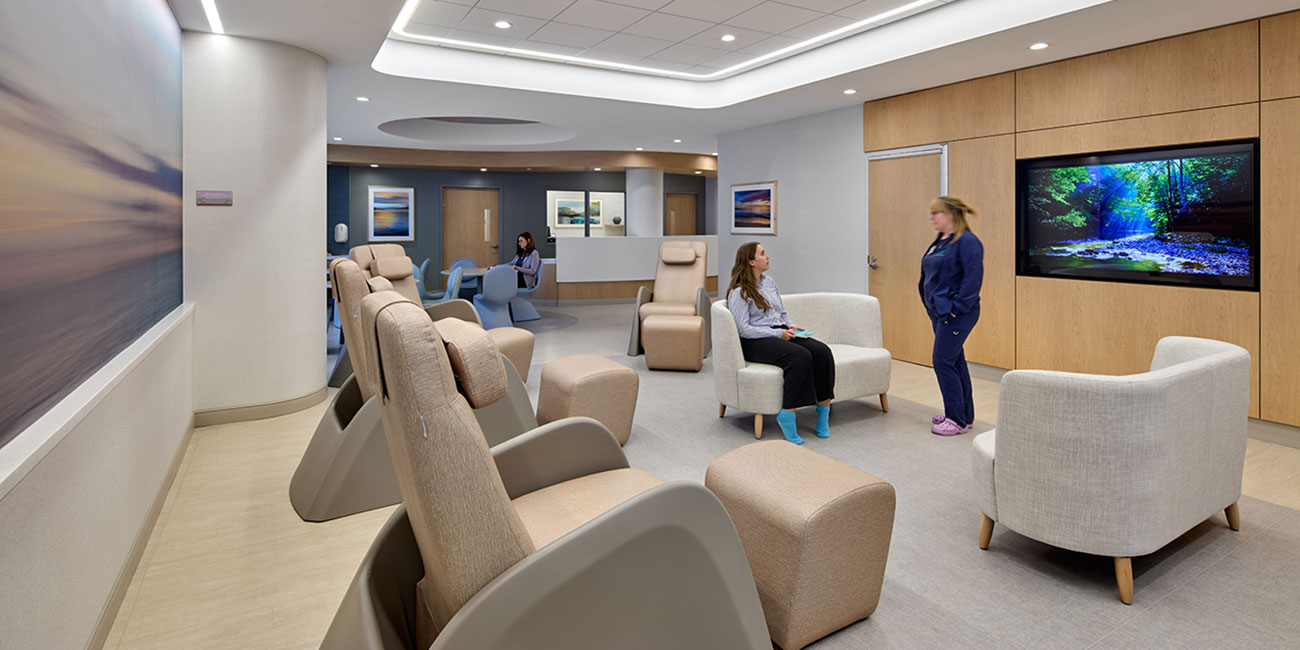
At Griffin Hospital in Derby, CT, the Griffin EmPATH (Emergency Psychiatric Assessment, Treatment, and Healing) Unit represents a forward-thinking approach to mental health crisis care, providing a calm, therapeutic alternative to the traditional emergency room for individuals experiencing acute emotional distress. Developed by SLAM in response to Griffin Hospital’s nearly 50% rise in crisis cases, the redesigned space reduces strain on the ER while prioritizing dignity, safety, and compassionate treatment. The unit features an open, flexible layout with abundant natural light, soothing colors, and carefully selected finishes that promote comfort and autonomy, while removing traditional barriers to foster trust between patients and staff. Operated by psychiatrists, social workers, and specially trained nurses, the unit emphasizes rapid assessment and personalized care, enabling approximately 75% of patients to return home within 24 hours without inpatient hospitalization. Through thoughtful design and human-centered practices, the EmPATH Unit advances mental health as a vital element of overall wellbeing while strengthening the hospital’s capacity to serve the community.
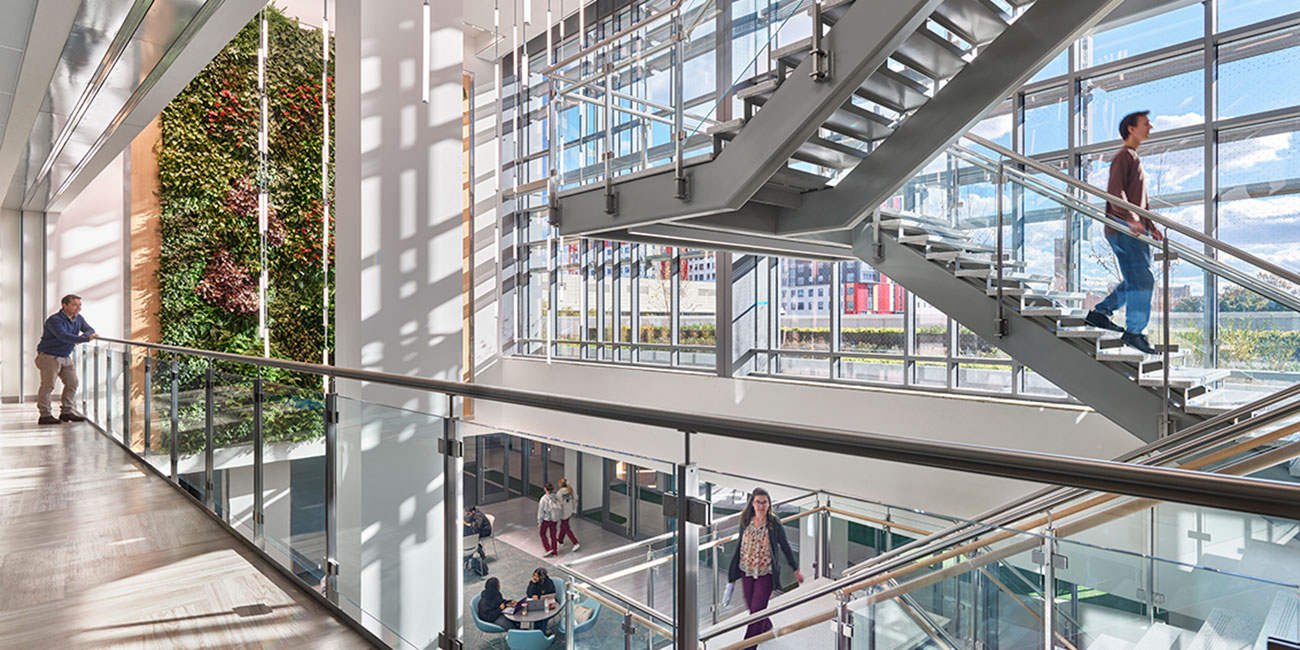
Completely renovated, expanded, and reimagined, Paley Hall at Temple University embodies a holistic vision of health, wellness, and sustainability, serving as a living model for its inhabitants, the College of Public Health. The design actively promotes physical well-being through open, communicating stairs that encourage daily movement, while abundant daylight, introduced through strategic interventions and a multi-level void, enhances occupant comfort and mental wellness. Biophilic elements, including a living wall and green roof with views of Philadelphia, strengthen connections to nature and place. At its core, a 10,000 SF student-centered wellness hub features a Zen Den, sensory room, counseling offices, lounge, and flexible collaboration areas that prioritize mental health, inclusivity, and community. A teaching kitchen fosters healthy nutrition and social connection, and an occupational therapy suite with simulated environments supports independence and real-world skill building. Designed to achieve WELL certification, and poised to become Temple’s first WELL-certified building, Paley Hall reinforces the College’s leadership in advancing health equity, environmental responsibility, and sustainable design.
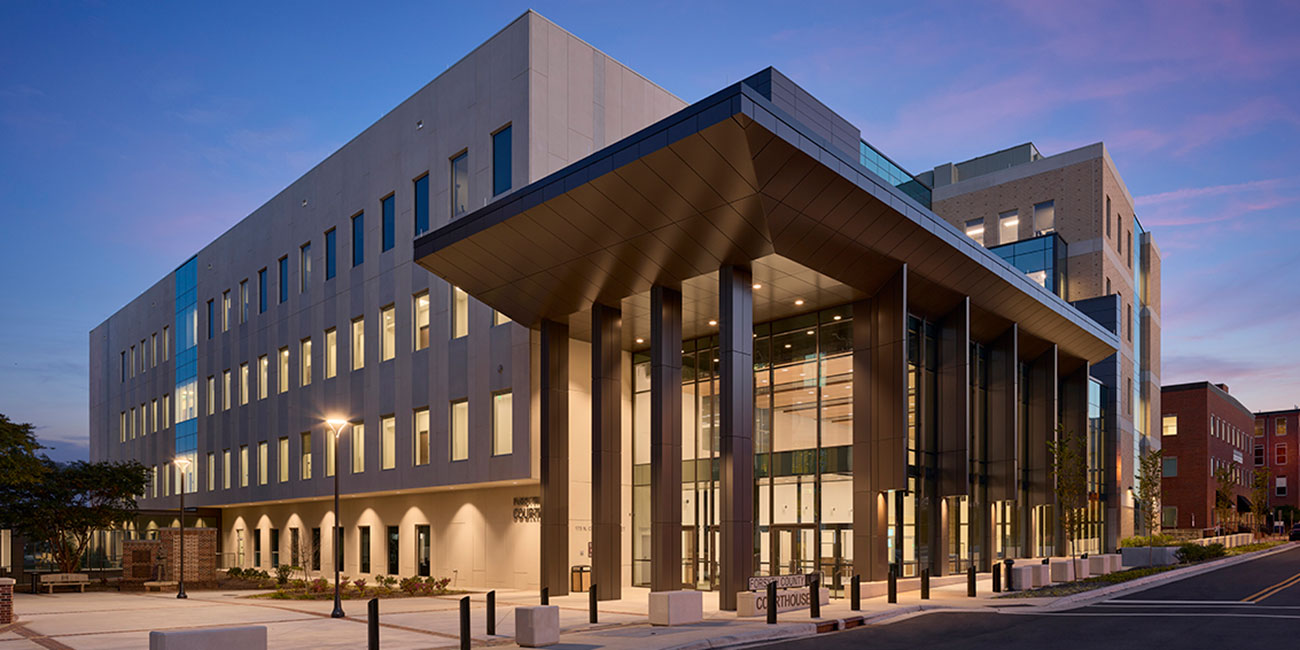
In a city redefining itself beyond its tobacco-era legacy, this six-story concentric Forsyth County Courthouse serves as a contextual yet forward-looking civic landmark that transforms industrial heritage into a setting centered on health, wellness, and long-term community sustainability. Situated within a government campus of repurposed warehouses and the County Jail, the design acknowledges its historic surroundings while fostering psychological comfort, dignity, equity, and accessibility for all users. Wellness-supportive strategies, most notably abundant daylight and continuous visual connections to the city, reduce stress, enhance mental clarity, and promote orientation and trust within what is often a high-pressure legal environment. A central public space unifies the building through clear wayfinding and intuitive navigation, minimizing confusion and anxiety to create a welcoming, cognitively supportive experience for visitors and staff alike. Importantly, the courthouse also serves as a setting where families navigate life-defining moments, like custody decisions, adoptions, reunifications, and civic milestones. By creating an environment that prioritizes calm, clarity, and dignity, the design helps reduce emotional strain and supports healthier outcomes for individuals and families during vulnerable times.
A bridge inspired by historic warehouse connectors physically links the courthouse to existing facilities, reinforcing operational efficiency, adaptive reuse principles, and campus cohesion, while balanced security measures maintain safety without compromising personal dignity. The result is a secure, humane, and sustainability-minded justice environment that strengthens both community trust and family well-being.
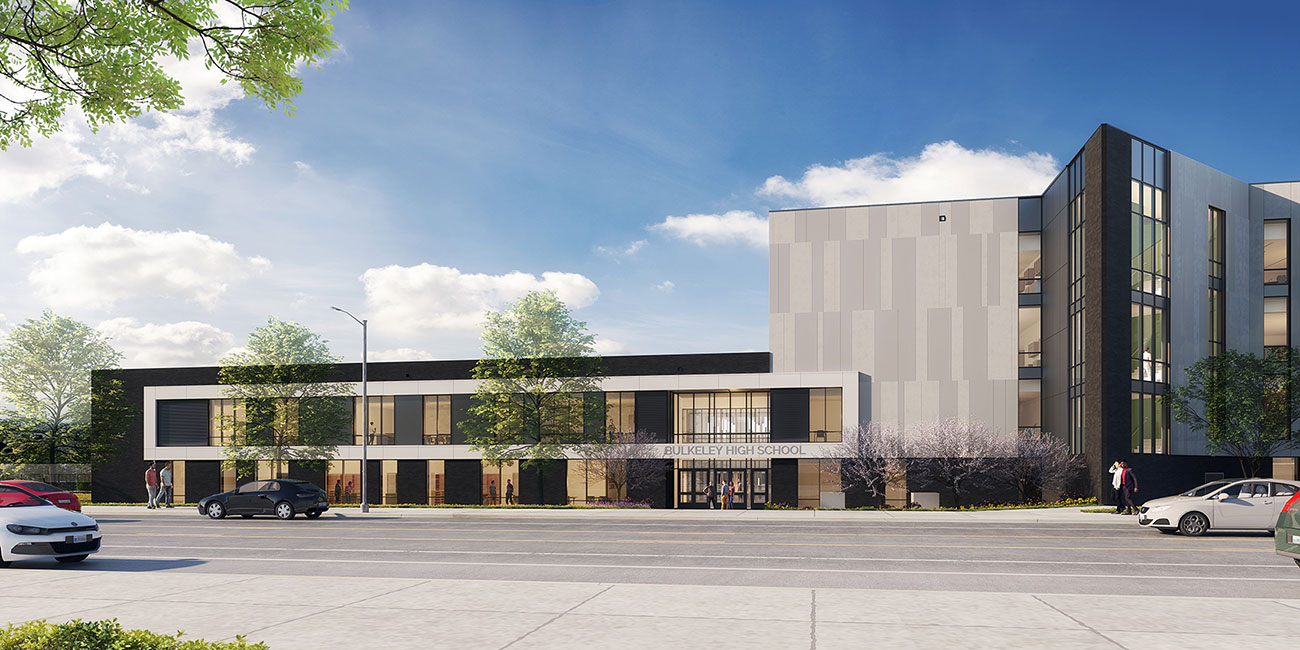
The renovation of Bulkeley High School, welcoming students in January 2026, transformed the historic campus into an “as-new,” state-of-the-art facility aligned with health, wellness, and sustainability. Grounded in high-performance design, the 585,000-square-foot renovation and additions support occupant well-being and long-term environmental responsibility. A high-performance building envelope, featuring 52,000 square feet of Swiss Pearl high-density fiber cement panels and 20,000 square feet of metal panels installed via a rainscreen system by ECO Cladding, enhances durability, moisture control, thermal resilience, indoor comfort, and energy efficiency. Expanded window areas maximize daylight, reducing artificial lighting and energy use while creating a healthier, more engaging learning environment. All-new, energy-efficient mechanical, HVAC, and electrical systems improve indoor air quality, optimize ventilation, and lower carbon impact. Comprehensive abatement of asbestos, PCBs, and mercury from the original 1926 structure further ensures a safe environment. Site upgrades, including improved athletic fields, tennis courts, parking, and circulation, enhance campus wellness and operations. Supported by building analytics consulting, the project meets Connecticut High Performance Building Standards and leverages Eversource Energy-efficiency incentives, positioning the school as a forward-looking model for sustainable, health-centered public education design.

