

In April, we had the pleasure of presenting at the SCUP 2026 Mid-Atlantic Regional Conference, sharing our perspective on how institutions can rethink complex campus assets. Across higher education, institutions are confronting the familiar challenge of aging Brutalist-era buildings that no longer support the academic experience, campus life, or performance standards that campuses need today. Built during a period of rapid enrollment growth, many now feel misaligned with expectations for daylight, flexibility, comfort, and sustainability.
Brutalist buildings are often amongst the most controversial structures on campus. Beloved by some for their unapologetically muscular expressions and derided by many as austere, alien or brooding in character.
Despite aesthetic debates, these buildings aren’t just liabilities. Many, particularly those in central campus locations, retain significant structural value and embody a major carbon investment. That makes the core question more important and more complex: should institutions renovate, replace, or fundamentally reimagine them?
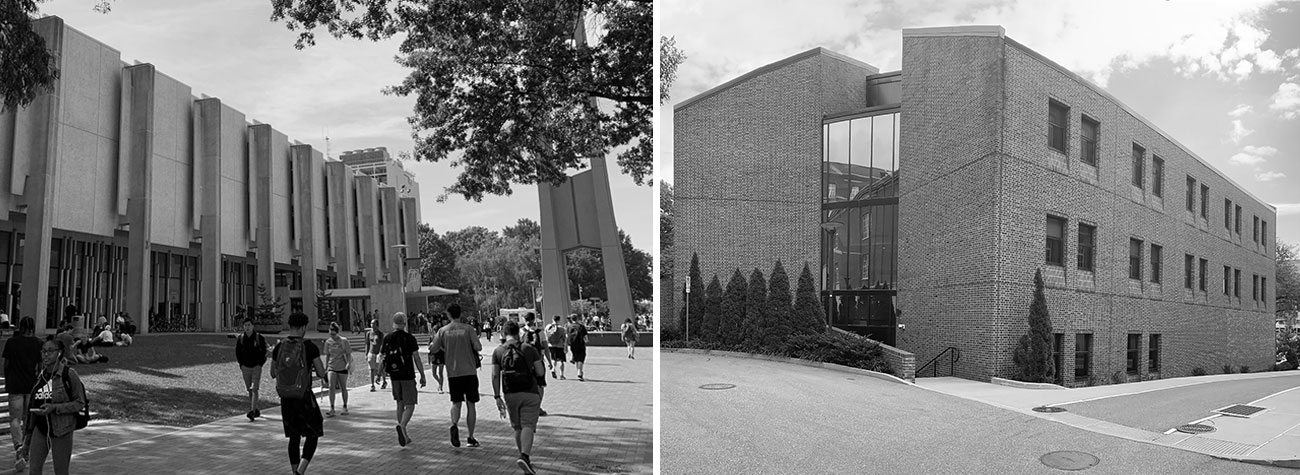
Existing photos of Paley Hall at Temple University and Nursing Sciences Building at Penn State University
Transformation Requires More Than a Facelift
Based on our experience in higher education planning, architecture, and engineering, we emphasized that addressing Brutalist buildings on campuses usually requires more than cosmetic upgrades. In our work with colleges and universities, we have seen that these buildings demand careful evaluation across design, performance, and campus fit. It often means rethinking the enclosure, structural constraints, and the building’s relationship to the campus around it. In practice, that can mean recladding facades, introducing daylight and transparency, and reworking entries and circulation to better connect the building to student life.
Not every solution depends on sweeping change. Targeted interventions can address deferred maintenance, aging systems, thermal inefficiencies, and outdated layouts in ways that significantly improve both performance and user experience. Effective strategies use capital investment to support academic goals while strengthening long-term campus value.
Performance Upgrades Require Analysis
One of the clearest misconceptions in renovating Brutalist buildings is the assumption that better performance is easy to achieve. It rarely is. Energy upgrades are often complicated by thermal bridging, aging envelope systems, irregular existing conditions, and the unintended consequences of seemingly straightforward interventions.
That’s why data-driven decision-making matters. Energy modeling, enclosure analysis, and life-cycle thinking can reveal solutions that are more effective than first assumptions suggest. They also help institutions focus investment where it will deliver the greatest long-term return.
The Payoff Extends Beyond the Building
When approached strategically, these projects improve the student and faculty experience, support contemporary teaching and learning, extend the life of campus assets, and strengthen a school’s story around stewardship, relevance, and long-term value.
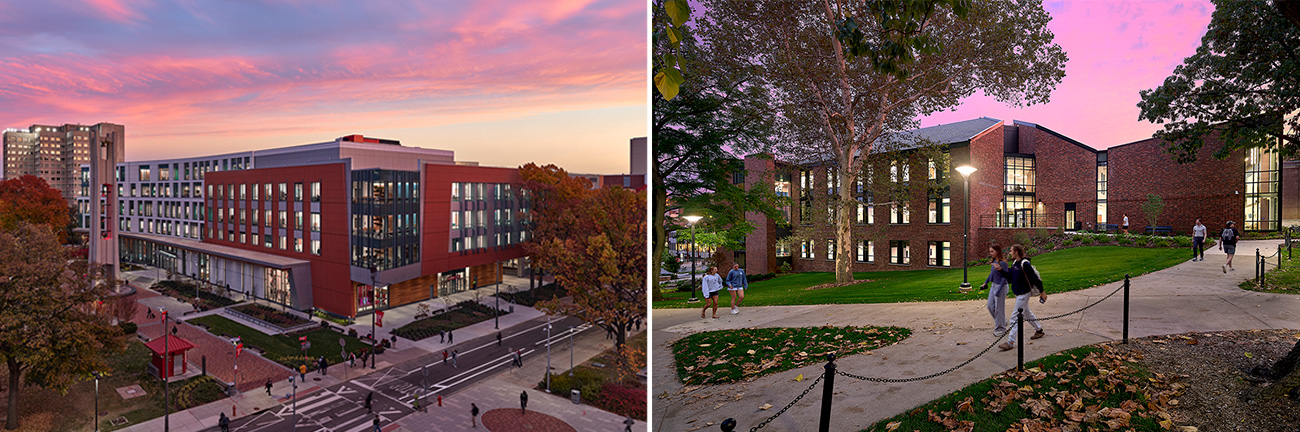
Transformation of Paley Hall at Temple University and Nursing Sciences Building at Penn State University
Why the Question Is More Urgent Now
These decisions become more pressing as higher education faces demographic and financial pressures. The enrollment cliff, rising operating costs, and increased scrutiny of capital spending are forcing institutions to rethink long-standing assumptions about growth, space, and investment.
As a result, many institutions are shifting from expansion to optimization. That means renovating and repositioning existing buildings where it makes sense, selectively replacing them where it does not, and evaluating every move through performance, embodied carbon, and mission alignment.
From Problem Buildings to Strategic Assets
The challenge of what to do with aging Brutalist buildings is becoming a defining issue for colleges and universities across the country. We believe institutions that respond most effectively will be those that look beyond easy answers, bringing creativity and mission-focused thinking to these buildings.
For architects, planners, and campus leaders, the opportunity transcends fixing failures. It’s about uncovering new value in existing assets, aligning physical space with institutional priorities, and transforming difficult buildings into places that are more open, efficient, and connected to life on campus.

 Luis Vildostegui
  John Cearley