

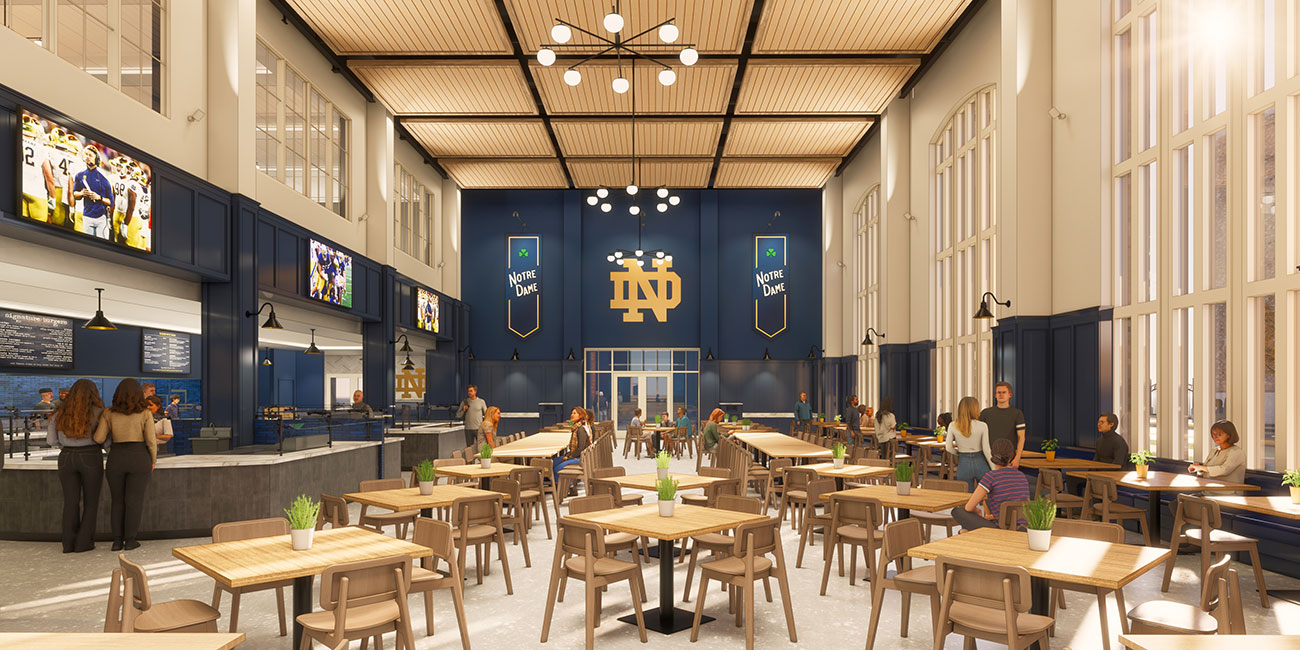
Across collegiate athletics, training tables that feed student-athletes have become far more than places to simply refuel. When thoughtfully designed, these spaces influence recovery and team comradery, streamlining and enriching the daily patterns of student-athlete life.
Training tables present a substantial opportunity for institutions to extend value beyond daily nutrition. As flexible, multi-use environments, they can serve as premium hospitality venues and revenue-generating assets for the university. Their ability to integrate into a wide range of building typologies emphasizes their versatility and growing importance on campus.
Since 2014, when the NCAA Legislative Council approved a rule change allowing Division I schools to provide unlimited meals and snacks to student-athletes, SLAM has designed over 20 training tables. SLAM prioritizes innovation, utility, and versatility when designing these hubs of activity. While there’s no single model for success, these facilities are always embedded into the campus context with unique site constraints, conveniently located where student-athletes gravitate. SLAM’s projects at University of Arkansas, University of Notre Dame, University of Connecticut, and Georgia Tech illustrate four examples that tell a larger story, exploring how food, space, and strategy intersect to redefine the modern student-athlete experience.
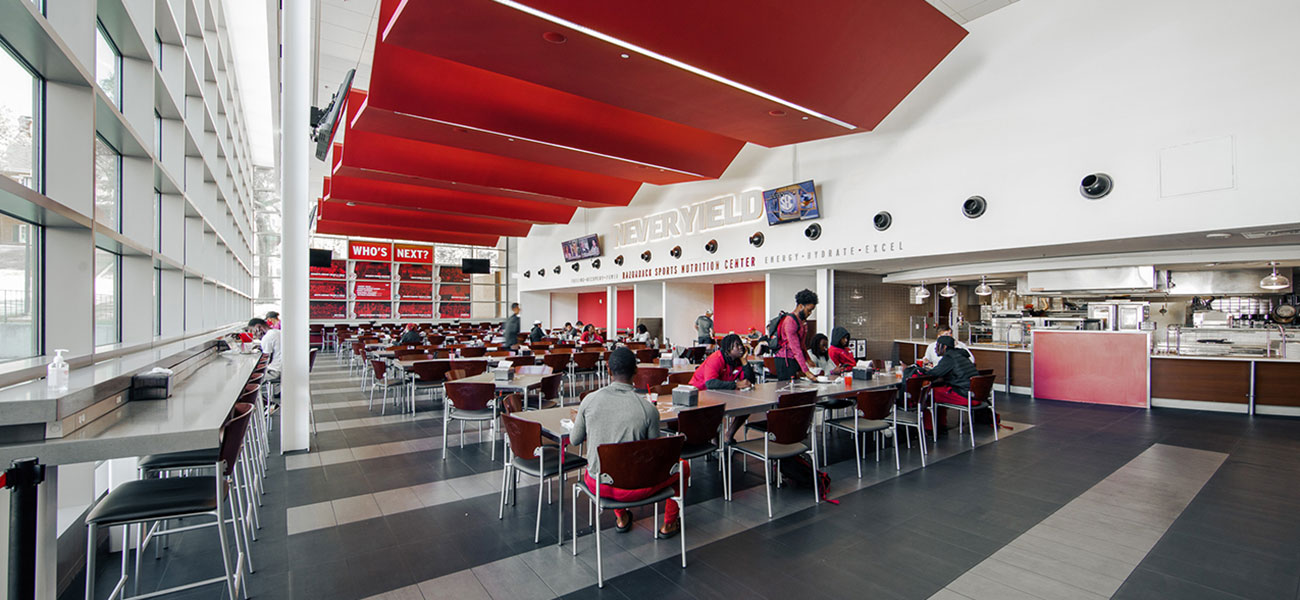
The stand-alone training table at the University of Arkansas incorporates a full student-athlete academic center, mental health offices, and life skills program. Convenient to everyday routes through campus, student-athletes utilize the grab-and-go window with a mobile ordering app. Since opening in 2014, the 55,000 SF facility has become a popular destination for student-athletes seeking nutrition, academic, and personal development resources. Together, these elements illustrate how a single innovation has grown into a comprehensive model for supporting student-athletes, both on and off the field.
At the University of Notre Dame, nutrition and wellness are two of the foundational pillars of Shields Hall, the new football operations center set to open in the summer of 2026. Alongside strength training, sports medicine, and sport psych, nutrition is recognized as a critical driver of student athlete development, recovery, and competitive success. At the heart of this effort is the new 17,000 SF training table, which replaces the dining support provided within the Guglielmino Athletics Complex and significantly elevates the quality, variety, and accessibility of food that’s provided. The teaching kitchen provides a hands-on learning environment for developing healthy eating habits. Student-athletes benefit from individualized nutritional consultations with registered dietitians, as well as access to diverse, performance-focused dining options, including custom smoothies and tailored meals.
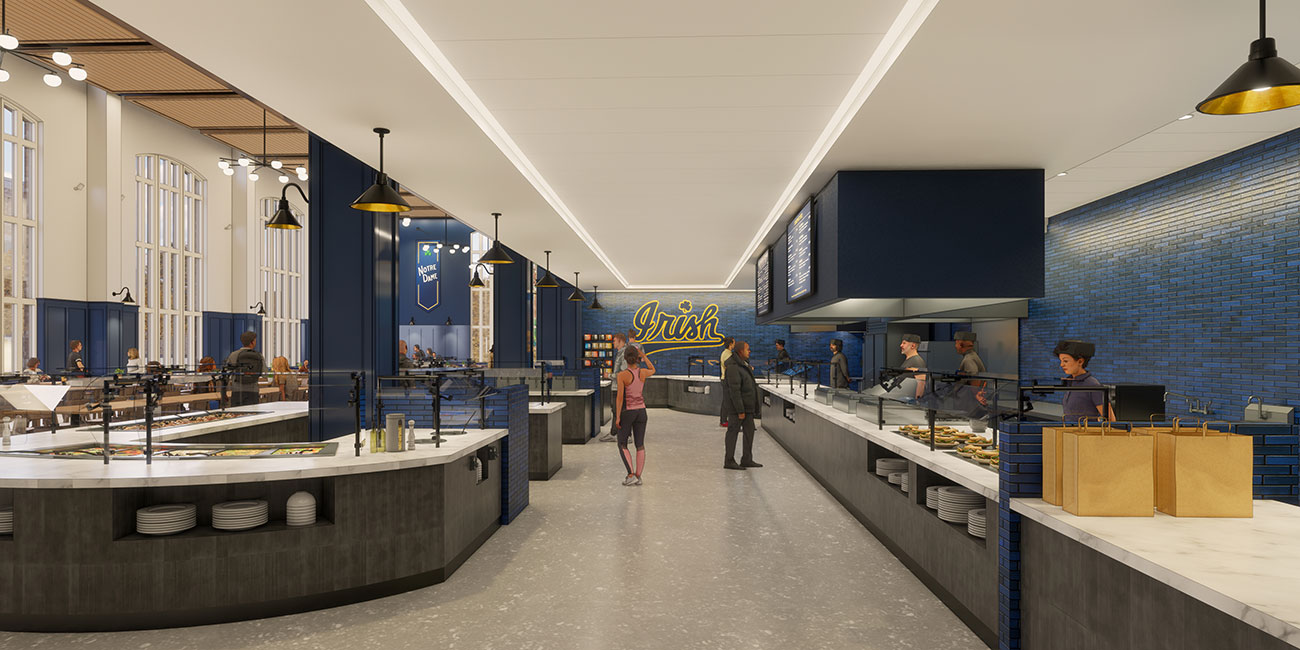
Jacob Vagts, AIA, Associate Principal at SLAM, asked Alexa Appelman, Director of Sports Nutrition (Football) at the University of Notre Dame, a few questions regarding best practices in sports nutrition for college student-athletes. Alexa brings extensive experience in optimizing student-athlete performance through nutrition, while Jacob offers insights from his work in athletic facility design. Their conversation highlights the intersection of nutrition and facility innovation in support of athletic development.
Jacob: How will performance and nutrition be tracked?
Alexa: At Notre Dame, we take a comprehensive, high-level approach, aligning nutrition with overall performance goals. Through regular collaboration between the performance, medical, and nutrition staff, we evaluate trends in health, recovery, and performance to ensure that our fueling strategies are effective. This integrated approach allows us to continuously refine and elevate the support we provide to our student-athletes.
Jacob: How does sharing meals strengthen culture across athletic teams?
Alexa: This new facility will be more than a dining space; it will be a community hub. Shared meals bring student-athletes from different teams together, fostering unity and reinforcing that we are one Fighting Irish family. These moments strengthen relationships, leadership, and a culture that’s focused on excellence and care.
Jacob: What innovative programming is planned for the teaching kitchen at Notre Dame?
Alexa: The teaching kitchen opens the door to dynamic, hands-on education. We’ll be hosting team-based cooking demonstrations, recovery meal workshops, international cuisine nights, and skill-building sessions focused on grocery shopping, meal prep, and fueling while traveling. This space allows us to do more than simply tell student-athletes what to eat; we can now teach them how and why while equipping them with lifelong skills.
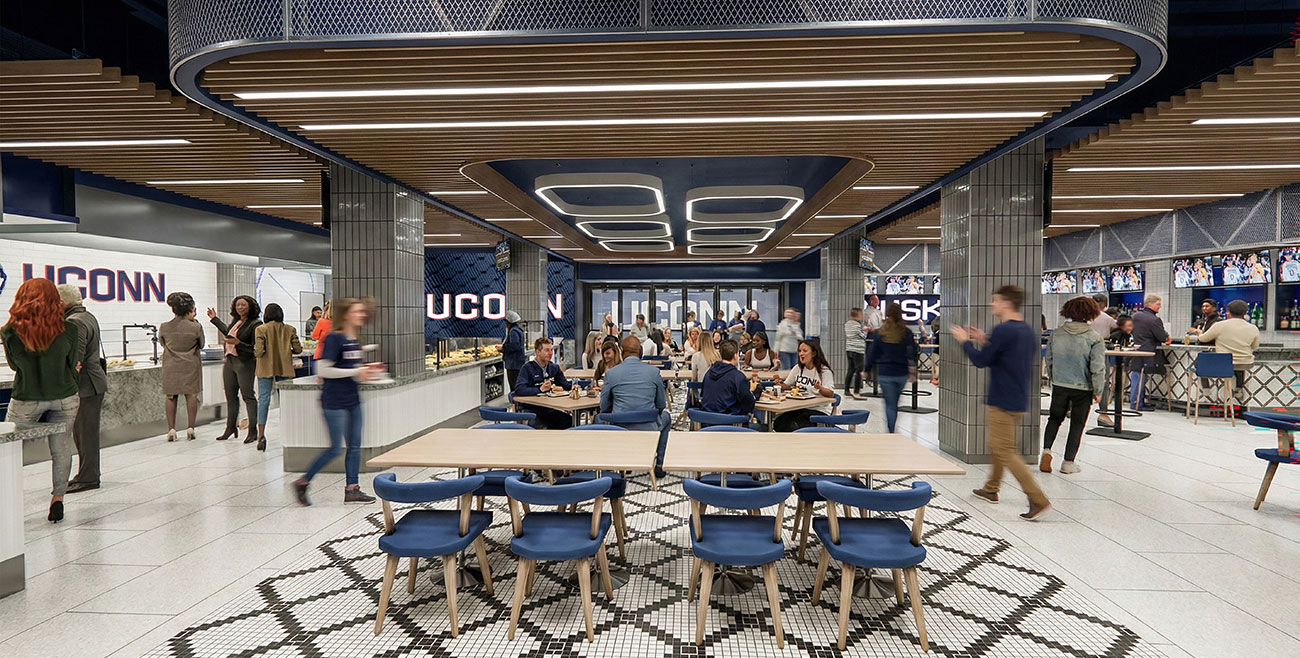
At the University of Connecticut, SLAM is reimagining the gameday atmosphere at Gampel Pavilion. As part of this multi-phased $100M renovation, the training table for all student-athletes doubles as a club on gameday. With the relocation of kinesiology functions to the event level, the project unlocks valuable concourse-level space that will be transformed into a dynamic setting that serves student-athletes daily, transforming into a premium club on game days.
The design stacks three tiers of premium spaces, efficiently connecting food service and simplifying construction phasing. Thoughtful architectural interventions, including new exterior wall openings, introduce natural light into wellness-focused dining areas, creating an inviting atmosphere. Operationally, the upgraded kitchen significantly increases capacity, supporting up to four times the existing points of sale and better capturing food and beverage demand during events. Beyond functionality, the area serves as a central hub for all student-athletes, fostering connection and strengthening the Huskies spirit across teams.
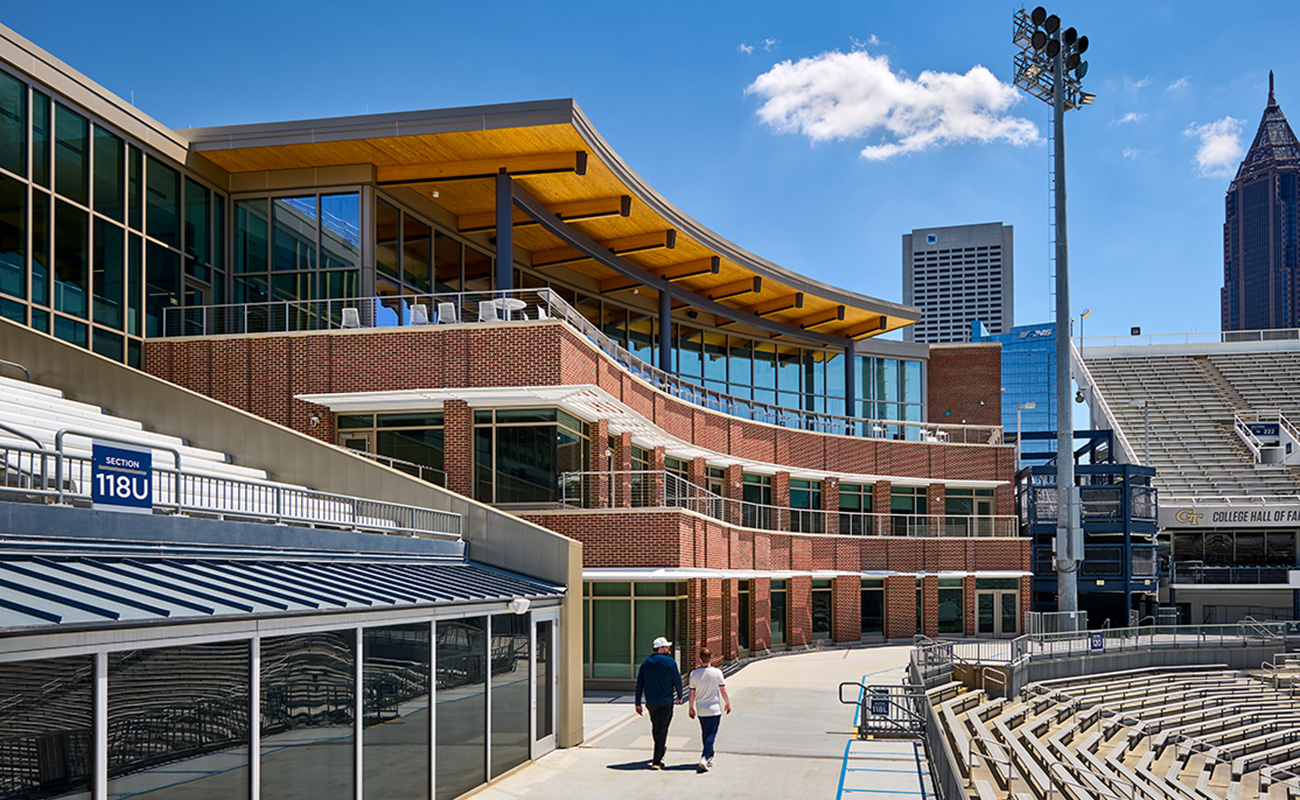
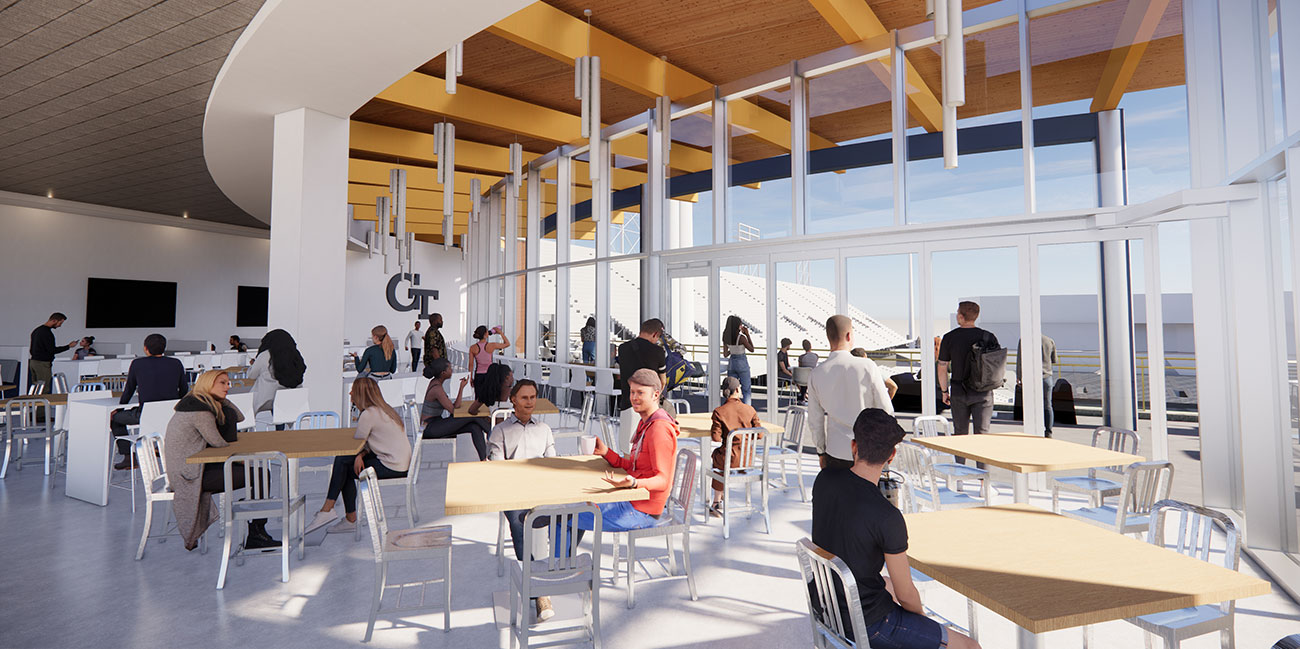
Georgia Tech’s training table, at the new Fanning Student-Athlete Performance Center, emphasizes the role of food as fuel for peak performance, integrating education on proper nutrient selection into its comprehensive approach to health, performance, and wellness. The training table is located on the top floor of the new four-story 100,000 SF building, overlooking Bobby Dodd Stadium. Georgia Tech’s approach reinforces best practices in nutrition, hydration, recovery, and supplementation, highlighting its commitment to optimizing both athletic performance and long-term health.
Training tables are evolving into strategic, multi functional spaces that go far beyond traditional dining. New features, from grab and go access points to hands on culinary instruction and integrated nutrition technology, are reshaping how student-athletes engage with food and support services. Built to strengthen performance, recovery, and team culture, these environments also contribute to broader well being and offer institutions adaptable venues that elevate recruiting efforts, host events, and create new revenue opportunities.
 Jacob Vagts, AIA

