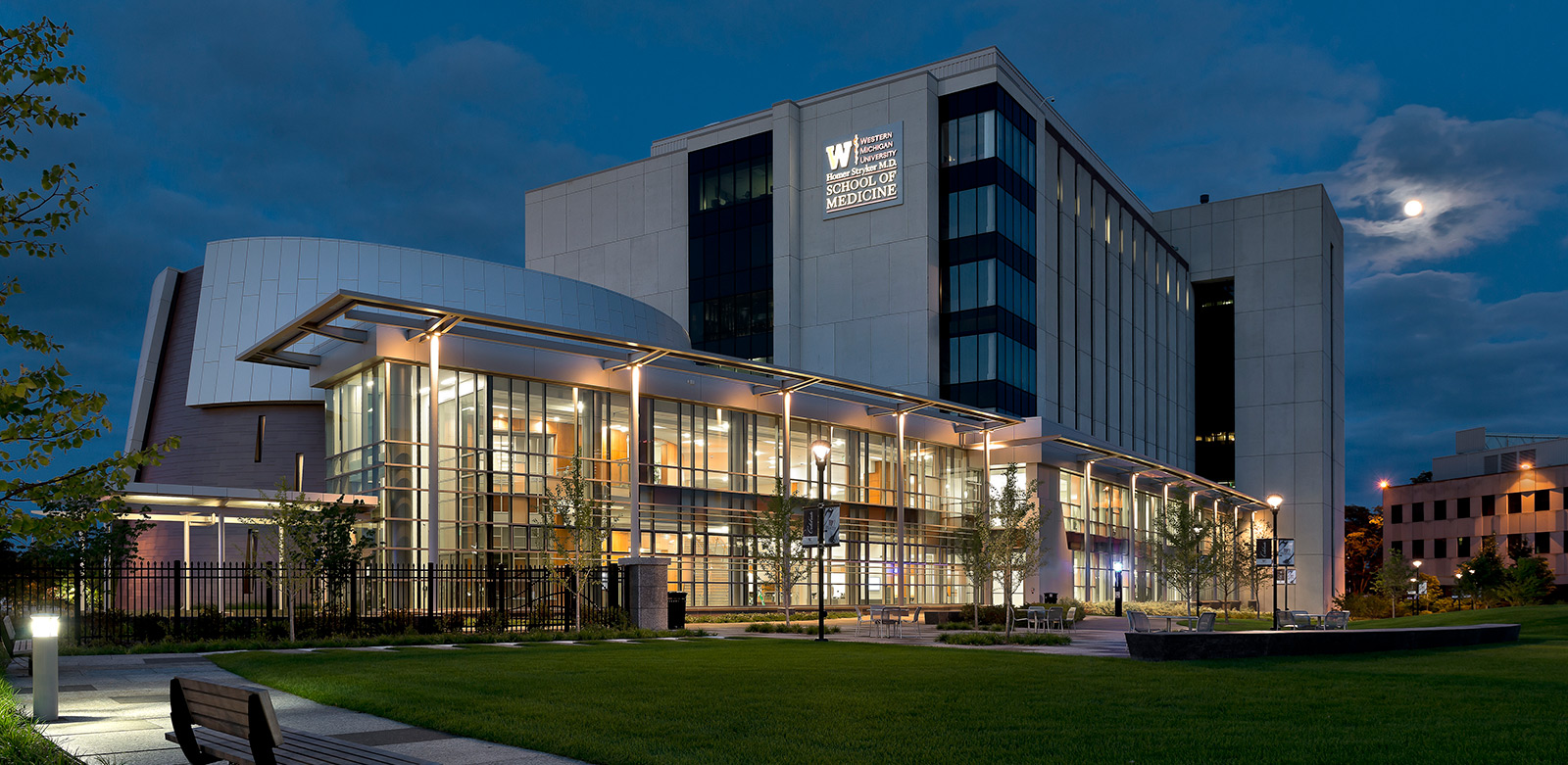
Opened in 2014 to receive the inaugural class of medical students at Western Michigan University, the Homer Stryker M.D. School of Medicine provides space for a continuous learning curriculum effected in and outside of classrooms, simulated skills labs or clinical research suites.
Envisioned as a change engine for the regions of Southwest Michigan and Northern Indiana, the facility supports the medical school’s innovative curriculum while providing large multi-purpose spaces needed to support the mission of promoting extramural funding and peer recognition.
Part of the W.E. Upjohn M.D. Campus located in downtown Kalamazoo, Michigan, the site and existing building were chosen during an initial site selection phase based upon the school’s pedagogical needs and medical community relationships the steering committee sought to create and maintain.
![[logo]](https://slamcoll.com/wp-content/themes/sub151-SLAM/resources/images/logo-only.png) at-a-glance
at-a-glanceThe Challenge was to create a home for Western Michigan University’s inaugural class of medical students, develop a progressive medical education curriculum, and recruit the faculty to support it, all within eighteen months from design to completion.
The Big Idea was to renovate an existing facility with deep ties to the medical community, focusing new construction only on the essential components that could not be accommodated within the existing building.
The Goal was to create a landmark experience that embodies the evolution of medical education and research, through a building that honors the region’s traditions while reflecting the progressive spirit of modern medicine.
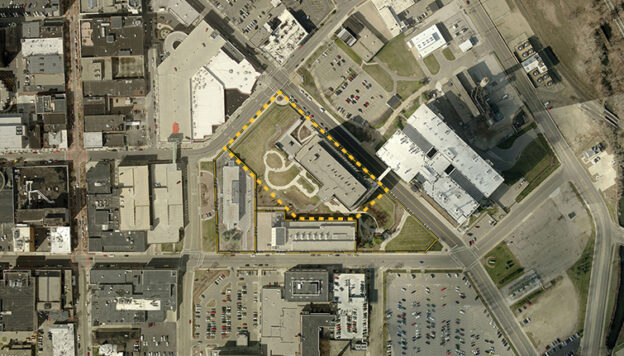
The vacant existing eight story building was located upon an underutilized downtown site and one of seven locations assessed by the SLAM Landscape and Architectural practices.
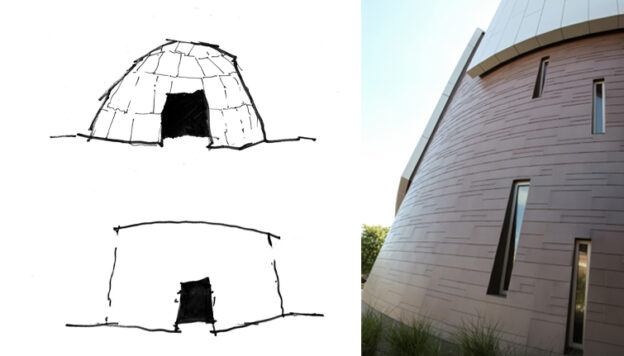
Indigenous housing forms from the region inspire the stacked, tiered classroom design as a distinctive expression of place.
The ground-level floor was envisioned as a showcase for the activities that shape the daily routine of a medical student’s curriculum. Team-based skills and simulation suites, along with supporting team write-up and study zones, are at the heart of the experience. Framing this highly interactive social zone are large-format team-based learning and meeting spaces that reflect a new era in pedagogical thinking and the importance of a global community built on interaction, exchange, and support.
The upper levels include administrative and faculty offices, a gross anatomy suite that serves as the County Examiner’s office, and several floors refit as modern research laboratories, with the ability to expand vertically within the existing tower.
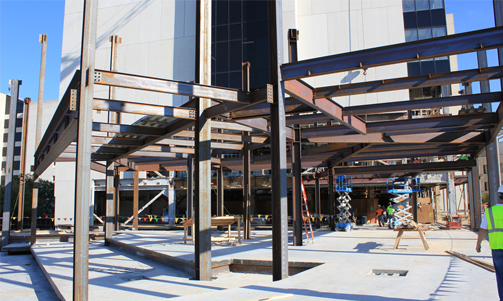
SLAM leveraged inhouse collaboration of Structural and Architectural services to shave critical days off the design schedule and facilitate early demolition and structural package releases.
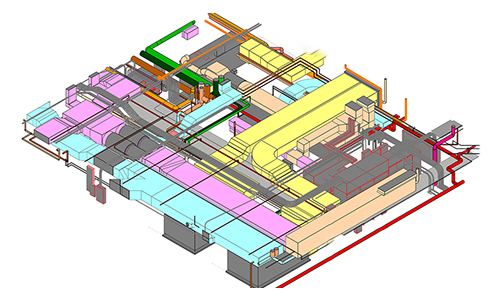
Level 400 BIM modeling was deployed to quickly analyze conflicts and generate solutions during the design process thereby speeding the construction and delivery of the facility.
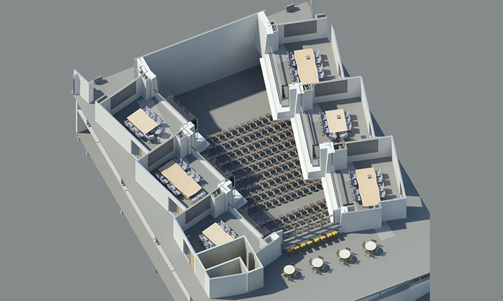
Early demolition work included existing floor removal for the accommodation of a two-story volume at the large format meeting hall.
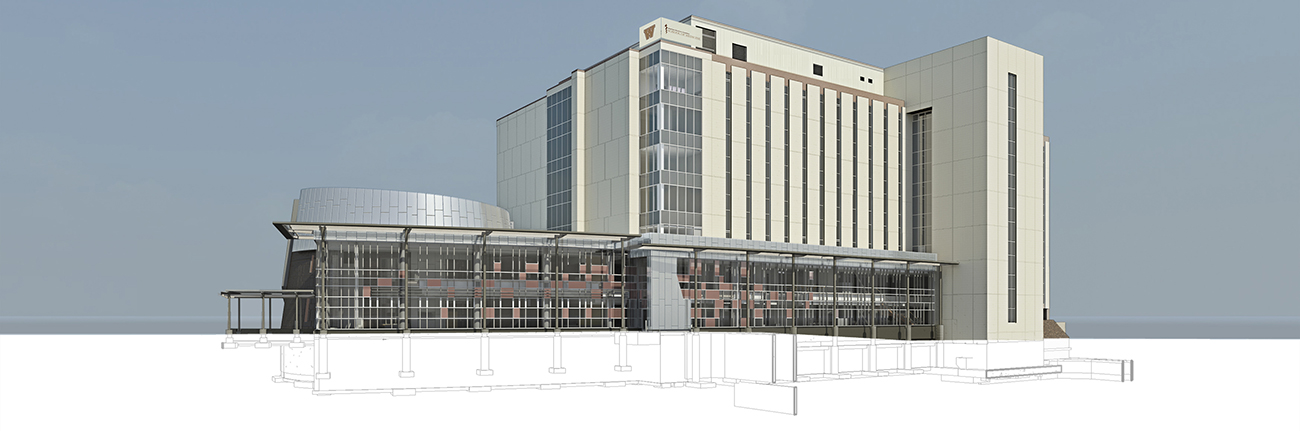
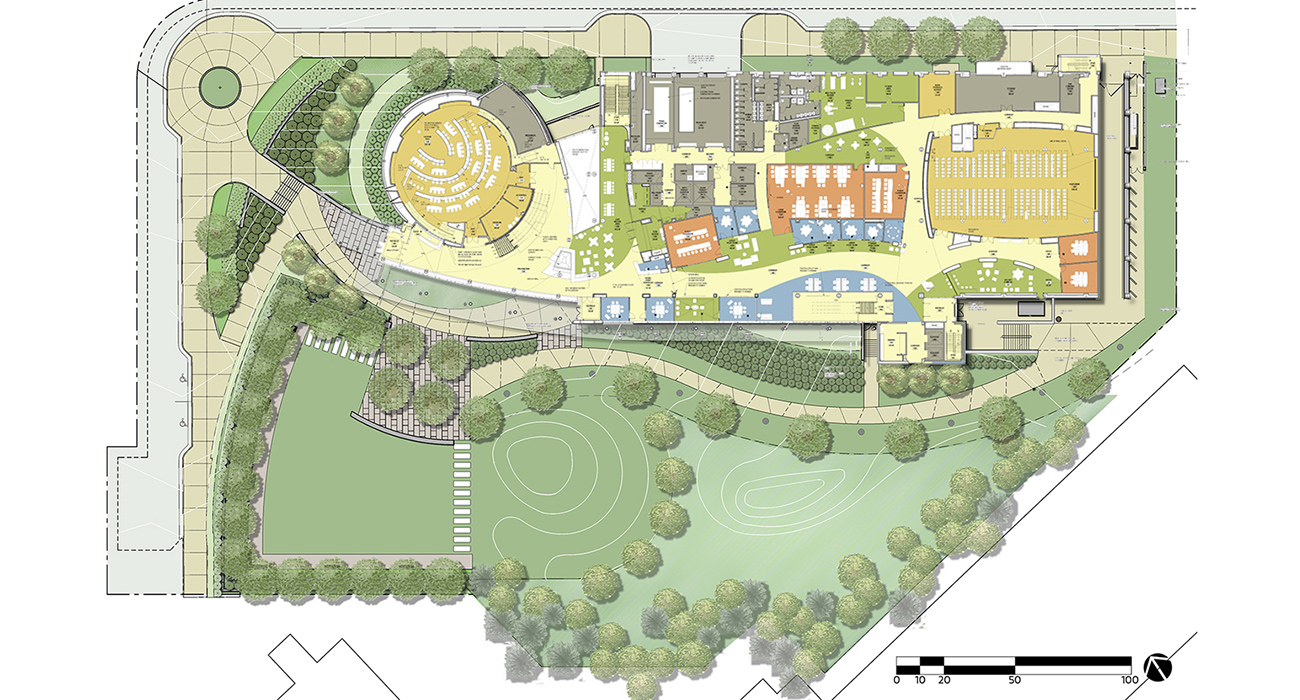
The project transformed the site into a vibrant downtown park that becomes the front lawn for the organic, two-story learner-centered addition. This new volume on the north and west sides of the tower base offers the social space required for an innovative team-based curriculum.
WMU SOM enrolls about 85 students each year in a simulation-rich, team-based curriculum focused on community service. Beyond training and retaining medical professionals, the school partners with local K–12 systems, laboratory scientists, and clinicians to improve regional healthcare. Its economic impact is substantial, contributing an estimated $1.6 billion to regional output, creating 1,600 jobs in 2020, generating $115 million in personal income, and supporting $353 million in sales. The presence of students, faculty, and staff has also helped revitalize downtown Kalamazoo.
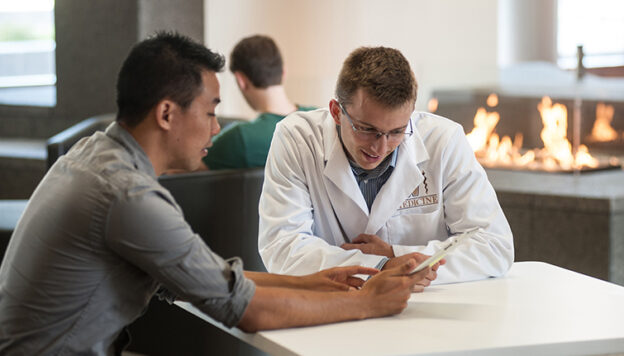
From the individual to the cohort, and from the hearth to the garden-view living room, students are immersed in a nurturing environment that fosters both comfort and success.
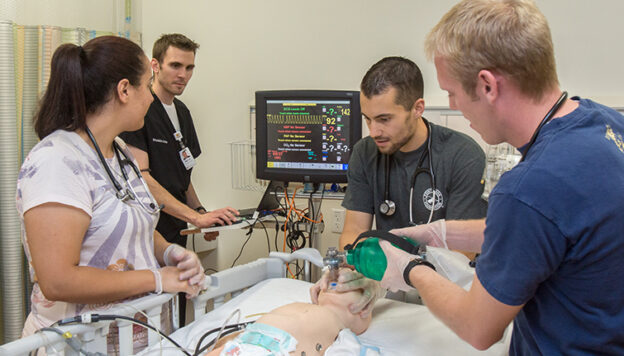
Skills training in a team-based environment strengthens learner retention and promotes real world scenarios.


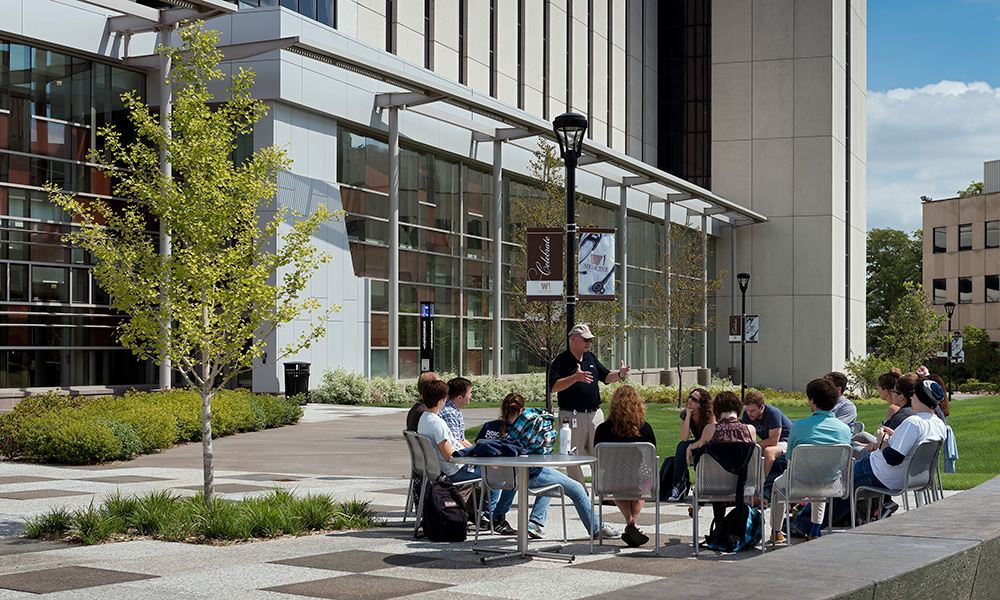
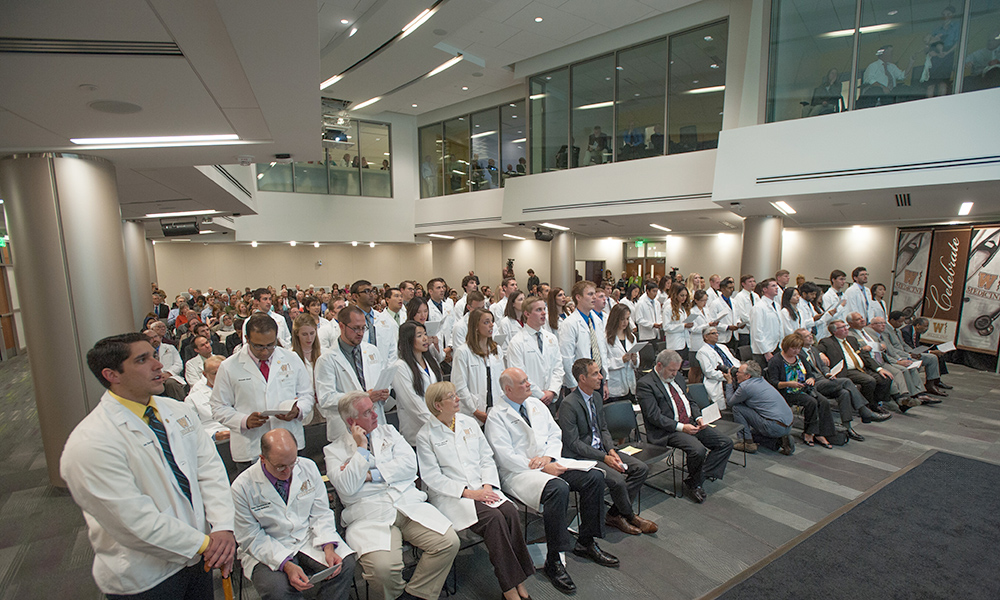
The site supports informal outdoor learning while also providing a lawn for white coat ceremonies.
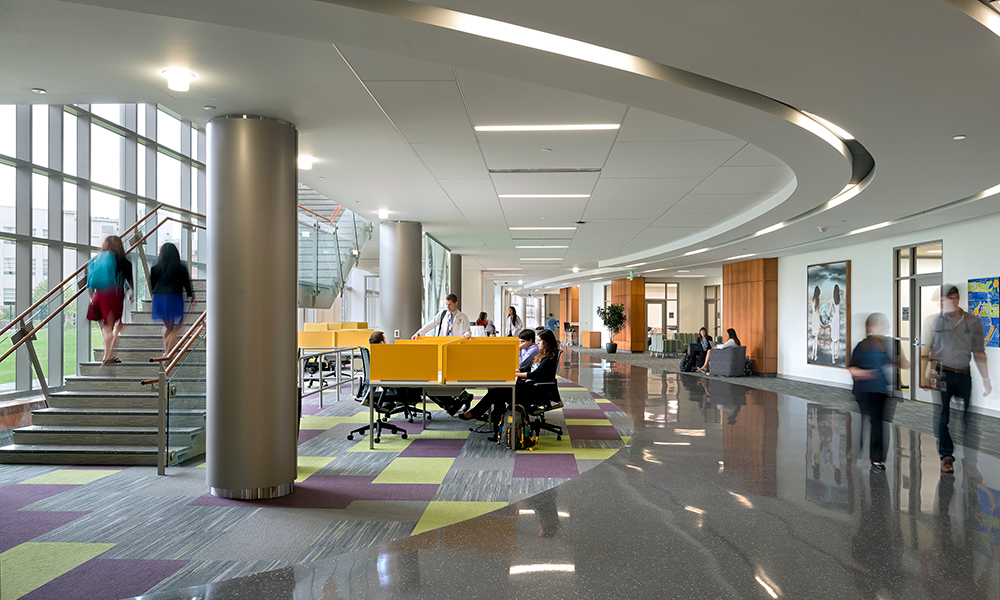
The student-centric social edge provides a daylit environment critical to learning, ample space for student interaction and pre/post staging or expansion of the multi-purpose meeting hall.
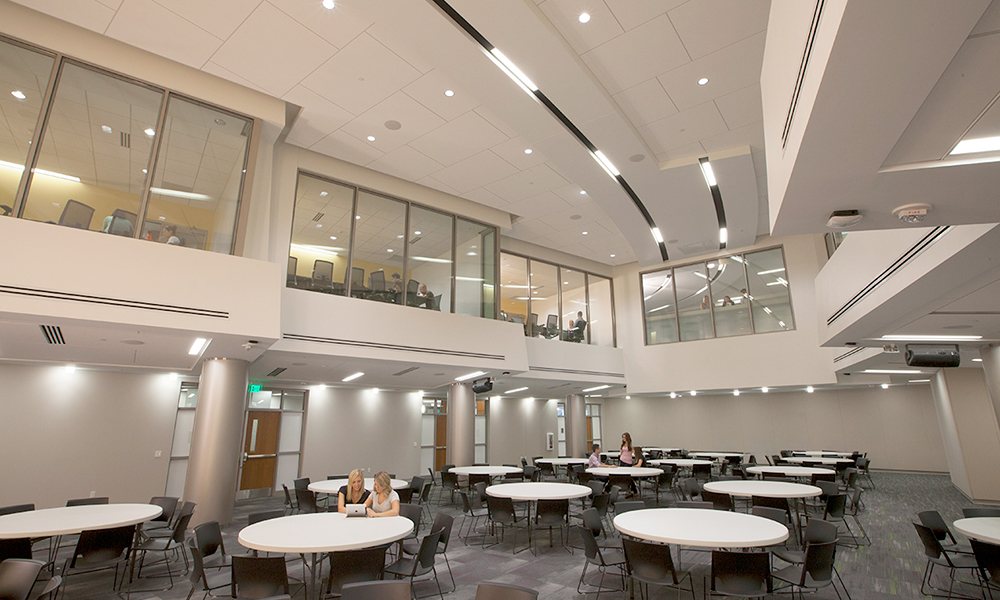
The multi-purpose meeting hall, which can be transformed into a 200-seat dining venue, hosts events such as dinners and white coat ceremonies, offers a gathering space for cohorts involved in global medical education partnerships, and serves as a vital conduit linking research efforts with the broader medical community.
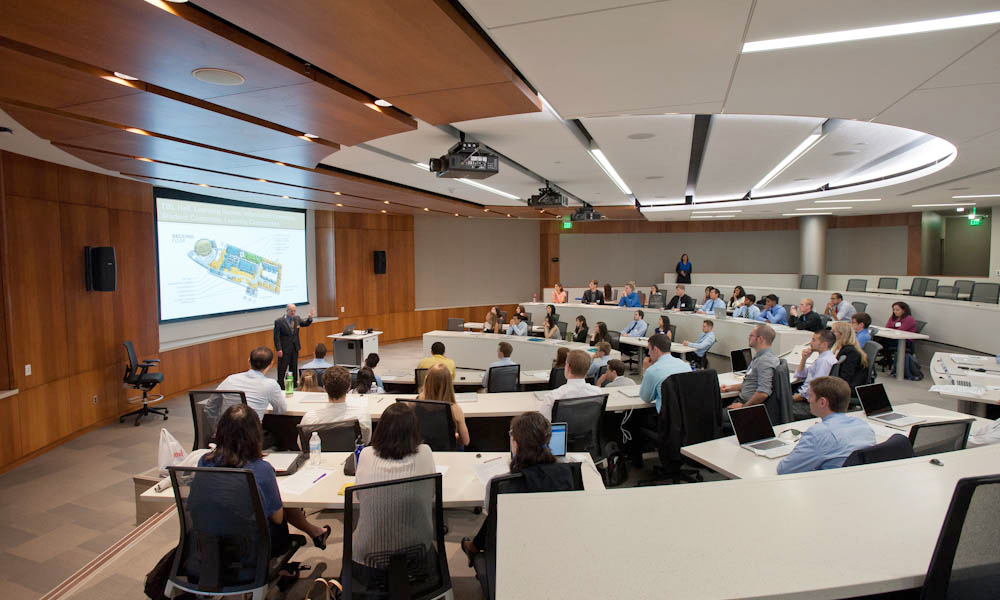
Team-based, tiered classrooms provide a focused environment for problem-based learning.
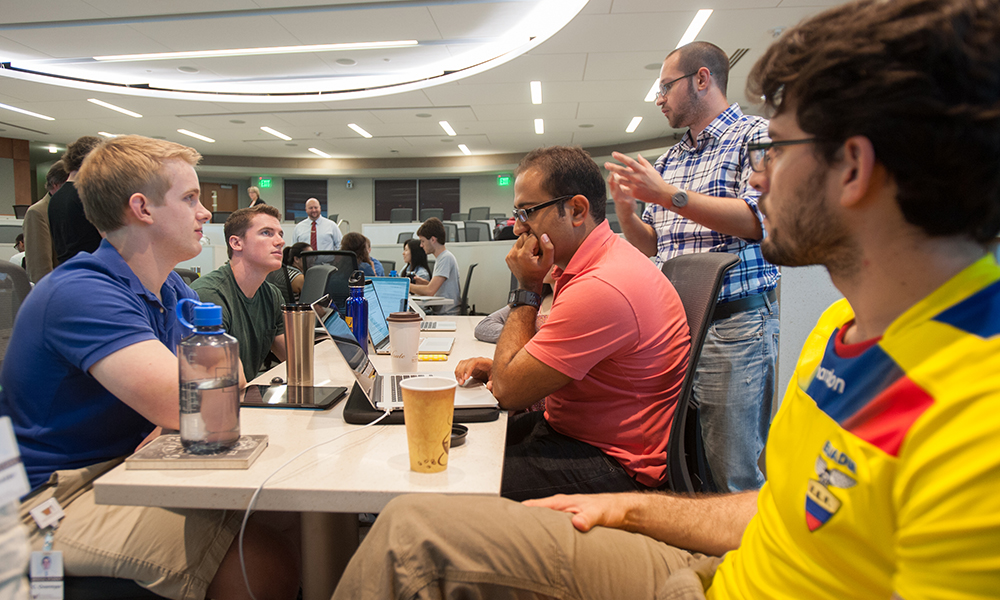
They spark collaboration, allowing students to tackle challenges and generate innovative solutions together.
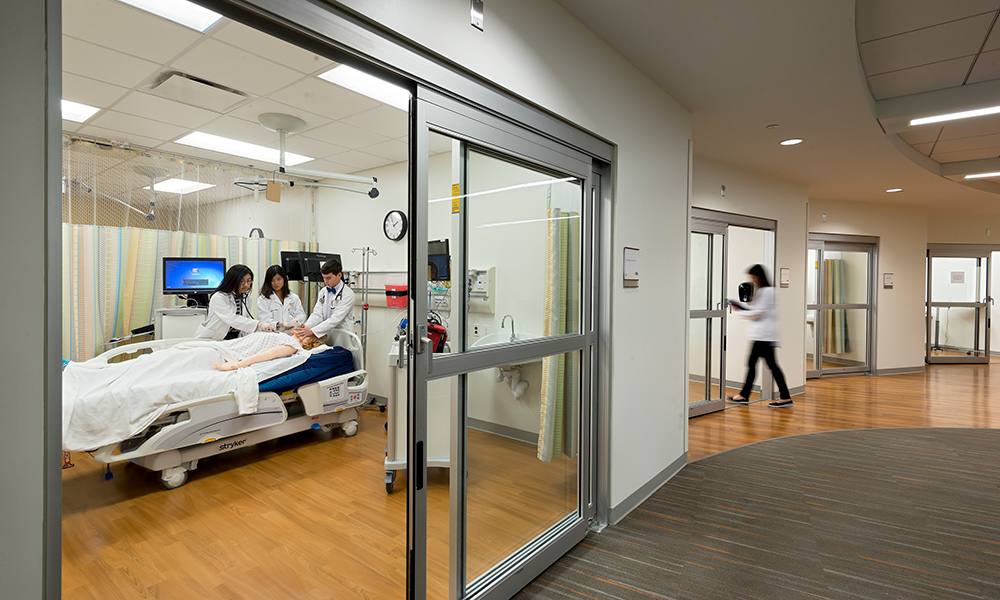
The 26,000-SF Simulation Center serves the needs of the professional community and partner hospitals as well as the School of Medicine.
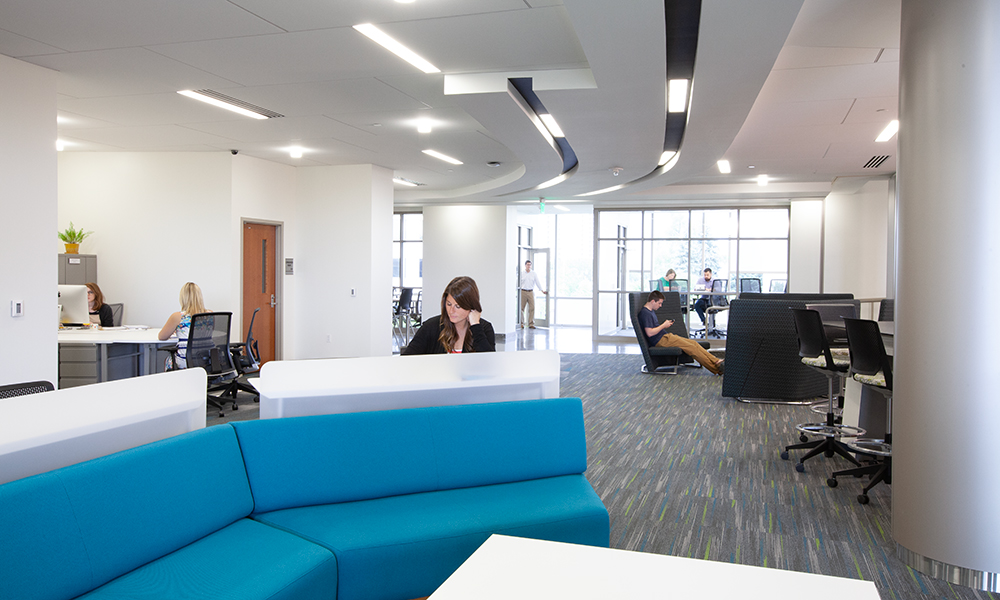
Student zones are conveniently located near the skills and training areas, connecting practical learning with social activities and community service.

2016 AIA Georgia Merit Award Winner



![[DT logo]](https://slamcoll.com/wp-content/themes/sub151-SLAM/resources/images/dt-logo-dark.png) design thinkers blog
design thinkers blog
