
The Simulated and Integrated Learning (SAIL) Institute, relocates an outdated 8,000 SF Clinical Performance Center and provides the University of Illinois Chicago with 29,000 SF of enriched learning specialty space to enhance healthcare education by simulating clinical practice using sophisticated technologies in a safe learning environment. The new facility offers a variety of benefits, including cutting-edge simulation; abundant daylight and views; right-sized rooms; robust technology; dedicated classrooms; and support spaces and functions that enable hands-on learning in an immersive environment – all in a new location proximate to other key facilities serving UIC’s medical education program.
![[logo]](https://slamcoll.com/wp-content/themes/sub151-SLAM/resources/images/logo-only.png) at-a-glance
at-a-glanceFounded in 1987, the UIC SAIL Institute was one of the first standardized patient centers in the world. Recognizing the need for expansion due to a high demand for additional space to expand programs, including technology-based simulation, standardized patients, procedural skills, UIC hired SLAM, in collaboration with local architect, Holabird & Root, to provide services for the build-out of a new SAIL Institute just south of the College of Medicine Campus.
Working closely with the University, the design team collaborated to create flexible, functional simulation spaces that advance clinical education through both technology-based and human-based learning.
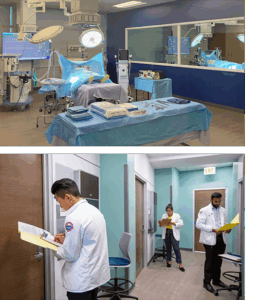 Technology-Based Simulation
The 19,000 SF Simulation Institute supports high-fidelity patient simulators and task trainers in adaptable labs that replicate O.R., ICU, E.R., Labor and Delivery, and inpatient rooms. Pre-briefing and debriefing spaces, a central/nurse station, equipment storage, and a procedural skills lab ensure highly functional, flexible operations. Control rooms, lockers, and administrative offices support the offstage support needed.
Human-Based Simulation
The 10,000 SF Clinical Performance Center features 22 exam rooms (four larger for inpatient scenarios) organized in three pods, allowing for flexible group sizes. Separate circulation for standardized patients and learners, dedicated training/lounge space, classrooms, lockers, and robust recording/playback technology support realistic, human-based simulation.
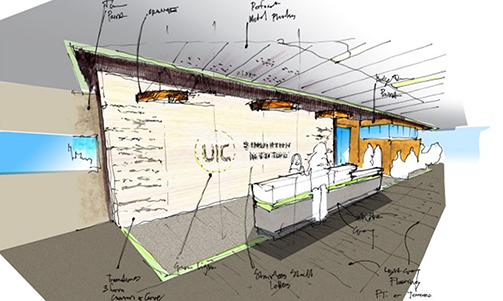
Renderings of key spaces supported meaningful exploration of color and texture, allowing the design team and user groups to more clearly visualize the proposed environment. An early concept for the main reception area is shown above.
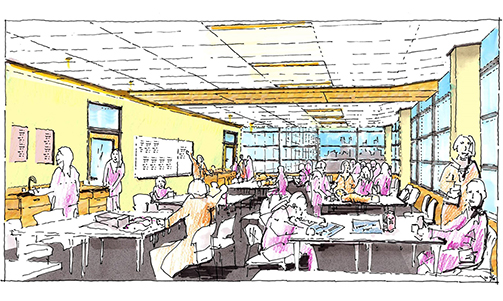
Envisioning the three-sided glass procedural skills lab, also used as an active learning classroom, allowed user working groups to clearly grasp the small-group layout and sense of spatial volume during design. We selected to include an operable partition to divide the room, providing additional flexibility for smaller groups. .

An early preview of the simulated hospital helped users understand the relationship between the central nurse station, debriefing rooms, and flexible simulated patient, ICU, and ER rooms.
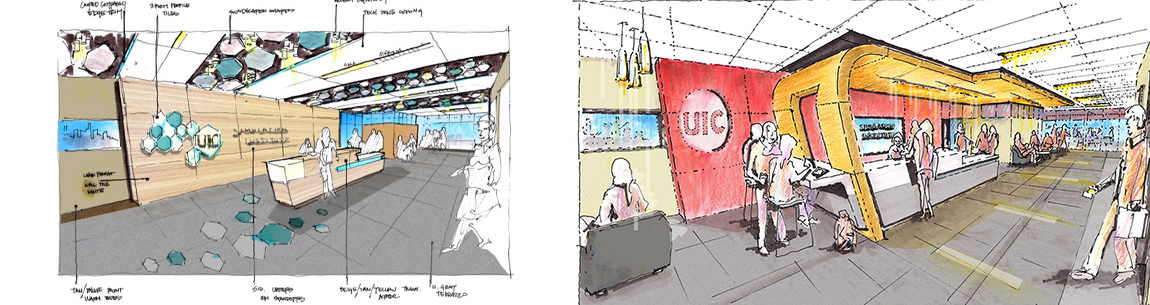
Multiple design options were explored for the reception area opposite the elevators, introducing richer color and expressive forms. One concept focuses on color and geometry, while another highlights wood elements combined with brighter hues.
The 29,000 SF SAIL project tripled the size of the existing facility, creating a comprehensive simulation center with seven flexible simulation rooms, 22 outpatient exam rooms, and key support spaces, including a 50-seat skills lab, divisible classrooms, and debriefing rooms that support inter-professional education. Serving more than 2,000 learners annually for over 55,000 learner-hours, SAIL is an innovator in simulation education and research, providing training to local, national, and international audiences. As a unit of UIC’s internationally recognized Department of Medical Education, SAIL collaborates across the UIC Health Sciences Simulation Consortium and related research and training laboratories to advance health professions education.


The Skills Lab accommodates up to 80 learners practicing procedural skills, pre-briefing, debriefing, casting, CPR training, and many other activities
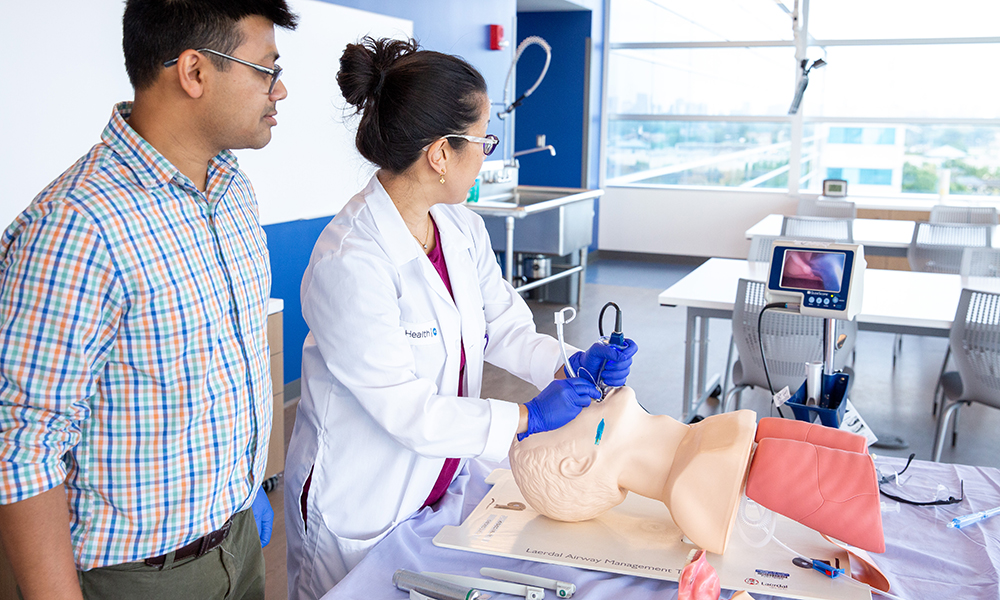
The space is divisible and features two utility sinks, AV technology, a camera, and flexible furniture to support a variety of configurations.

Three walls of glass provide abundant natural light, which can be easily controlled from a single location.

There are a variety of spaces for learners to gather before, during, and after simulated activities, including pre-briefing and debriefing. These sessions can take place in an open collaboration area, a classroom, or a dedicated debriefing room.
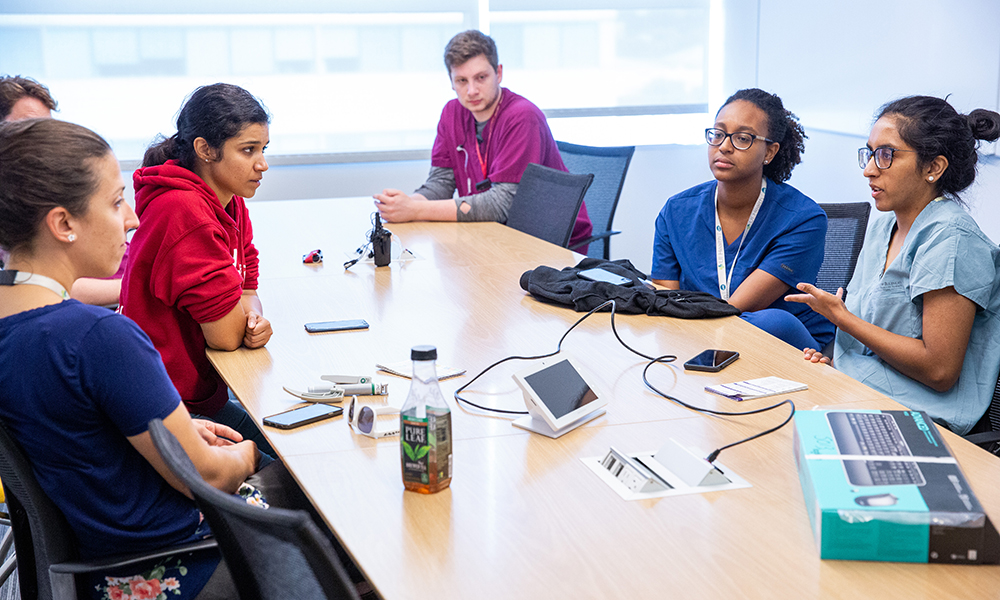
These sessions can take place in an open collaboration area, a classroom, or a dedicated debriefing room.
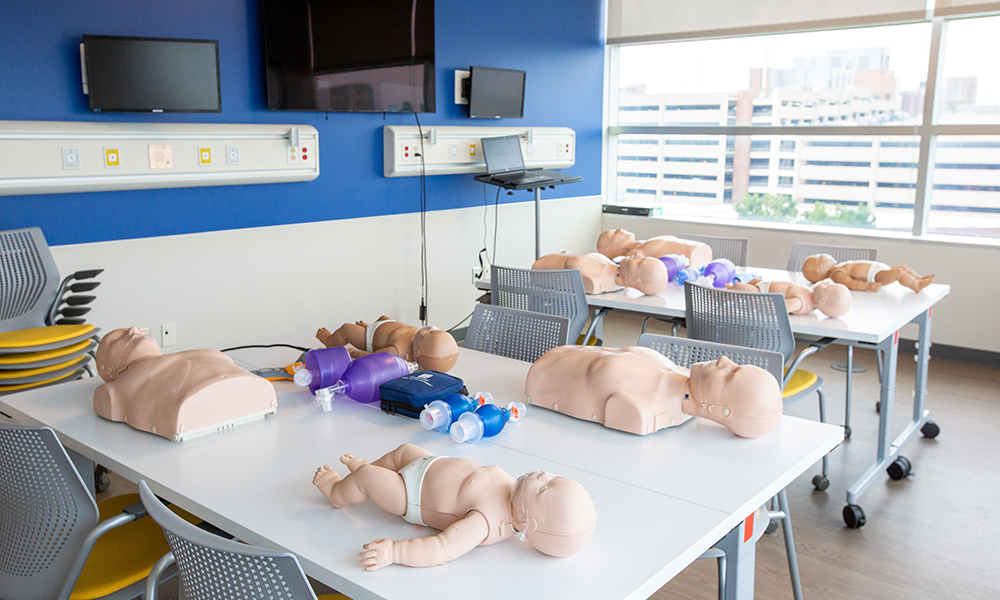
Classrooms are designed for flexibility, featuring operable partitions, wipeable surfaces, AV technology, headwalls, and movable furniture – transforming effortlessly from a traditional classroom to a fully equipped skills lab.

Our state-of-the-art facility looks like a modern hospital, and that’s the point. It allows us to leverage more complex simulated events than ever before.




![[DT logo]](https://slamcoll.com/wp-content/themes/sub151-SLAM/resources/images/dt-logo-dark.png) design thinkers blog
design thinkers blog
