GLASTONBURY, CT, March 12, 2026 – Architecture and design firm The S/L/A/M Collaborative (SLAM) has announced key leadership appointments effective March 1, 2026 as part of its succession plan.

Greg Coles, AIA has been appointed to Board Chair, focused on strategic planning and firm governance.  Kevin Herrick, AIA has been appointed as President and Managing Principal of Markets and will oversee the firm’s business strategy and day-to-day management for the Firm Core Team.

In addition to Herrick, SLAM’s Firm Core Team will be comprised of Principal Steve Doherty, AIA, Chief Operating Officer, Dan Kantor, Chief Financial Officer, Rick Herzer, AIA Managing Principal Design, and Amy Samuelson, AIA Chief Talent Officer.

Former Board Chair Terri Finucane, IIDA transitions to Principal Emeritus and will continue to lead projects for key clients.

“Collaborative leadership is an important part of SLAM’s evolution, business strategy, and legacy.” Coles remarked. “With this team, I know we will deliver deep expertise, an immersive process, and powerful ideas that advance our client’s missions.”

These appointments reinforce SLAM’s commitment to delivering impactful design solutions for a wide portfolio of clients with a collaborative approach. As the team evolves, SLAM is not just prepared for the future, but actively building it, scaling its national presence and achieving new levels of design innovation.

About SLAM
SLAM (The S/L/A/M Collaborative) is a national multi-disciplinary design firm offering architecture, planning, interior design, landscape architecture, site planning, structural and civil engineering, pre-construction, with construction services offered throughout the New England region. Our market focus is on education, healthcare, corporate, science and technology, justice, and sports sectors. Our infinite drive to unlock and solve complex design problems renders creativity in design to enrich lives. SLAM has offices in Atlanta, Boston, Denver, Glastonbury, Iowa City, Los Angeles, Orlando, Philadelphia, and Providence. Learn more about SLAM at www.slamcoll.com.


SLAM remains committed to advancing projects across multiple markets that demonstrate how the built environment can actively promote both human health and environmental responsibility. As institutions place greater emphasis on mental and physical wellbeing, equitable access, and long-term resilience, design has become essential infrastructure, not an amenity. Through high-performance systems, human-centered planning, and strategies that prioritize dignity, connection, and sustainability, the following projects illustrate a holistic vision of wellness – one that supports people, strengthens communities, and preserves resources for generations to come.
 

Designing Calm in Moments of Crisis

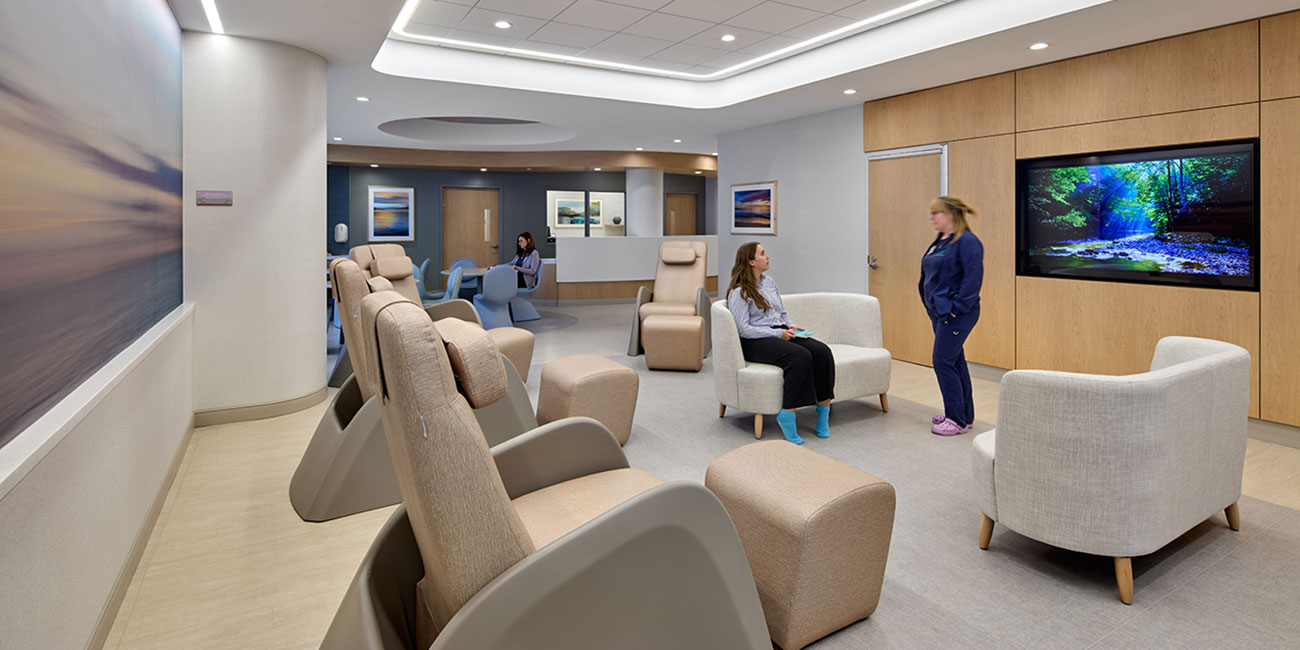
At Griffin Hospital in Derby, CT, the Griffin EmPATH (Emergency Psychiatric Assessment, Treatment, and Healing) Unit represents a forward-thinking approach to mental health crisis care, providing a calm, therapeutic alternative to the traditional emergency room for individuals experiencing acute emotional distress. Developed by SLAM in response to Griffin Hospital’s nearly 50% rise in crisis cases, the redesigned space reduces strain on the ER while prioritizing dignity, safety, and compassionate treatment. The unit features an open, flexible layout with abundant natural light, soothing colors, and carefully selected finishes that promote comfort and autonomy, while removing traditional barriers to foster trust between patients and staff. Operated by psychiatrists, social workers, and specially trained nurses, the unit emphasizes rapid assessment and personalized care, enabling approximately 75% of patients to return home within 24 hours without inpatient hospitalization. Through thoughtful design and human-centered practices, the EmPATH Unit advances mental health as a vital element of overall wellbeing while strengthening the hospital’s capacity to serve the community.
Honoring the Past, Designing for Well-Being

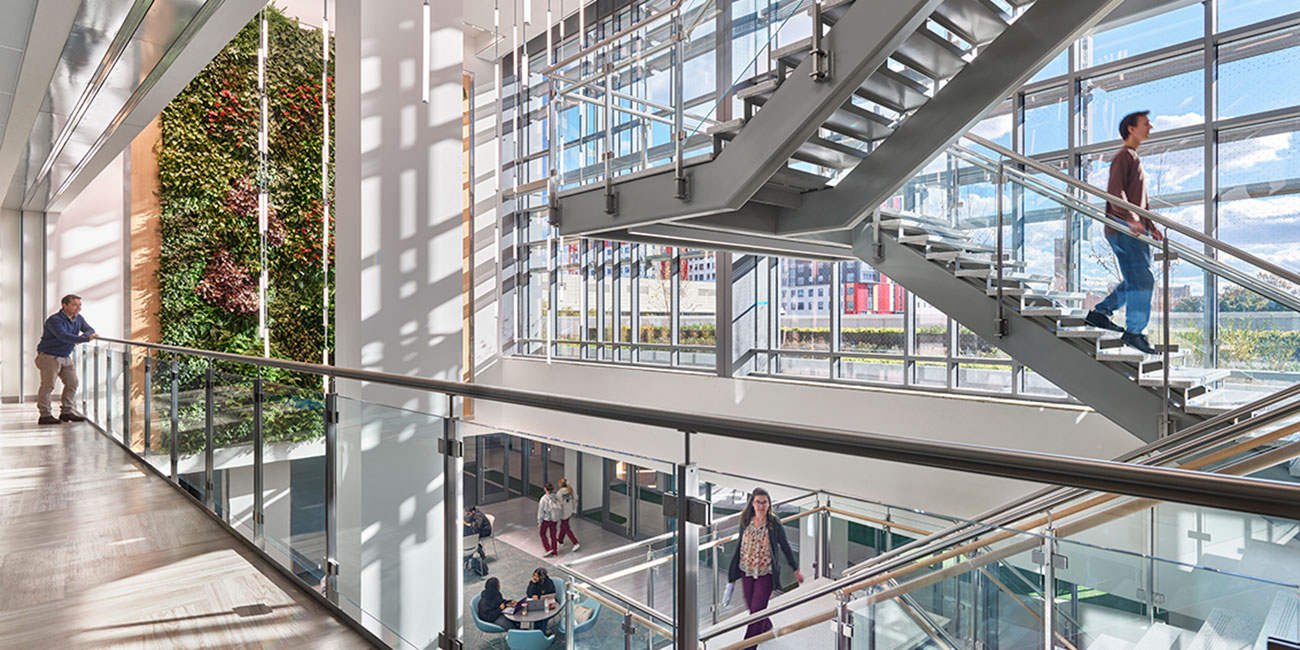
Completely renovated, expanded, and reimagined, Paley Hall at Temple University embodies a holistic vision of health, wellness, and sustainability, serving as a living model for its inhabitants, the College of Public Health. The design actively promotes physical well-being through open, communicating stairs that encourage daily movement, while abundant daylight, introduced through strategic interventions and a multi-level void, enhances occupant comfort and mental wellness. Biophilic elements, including a living wall and green roof with views of Philadelphia, strengthen connections to nature and place. At its core, a 10,000 SF student-centered wellness hub features a Zen Den, sensory room, counseling offices, lounge, and flexible collaboration areas that prioritize mental health, inclusivity, and community. A teaching kitchen fosters healthy nutrition and social connection, and an occupational therapy suite with simulated environments supports independence and real-world skill building. Designed to achieve WELL certification, and poised to become Temple’s first WELL-certified building, Paley Hall reinforces the College’s leadership in advancing health equity, environmental responsibility, and sustainable design.
Designing Justice with Dignity for Individuals and Families

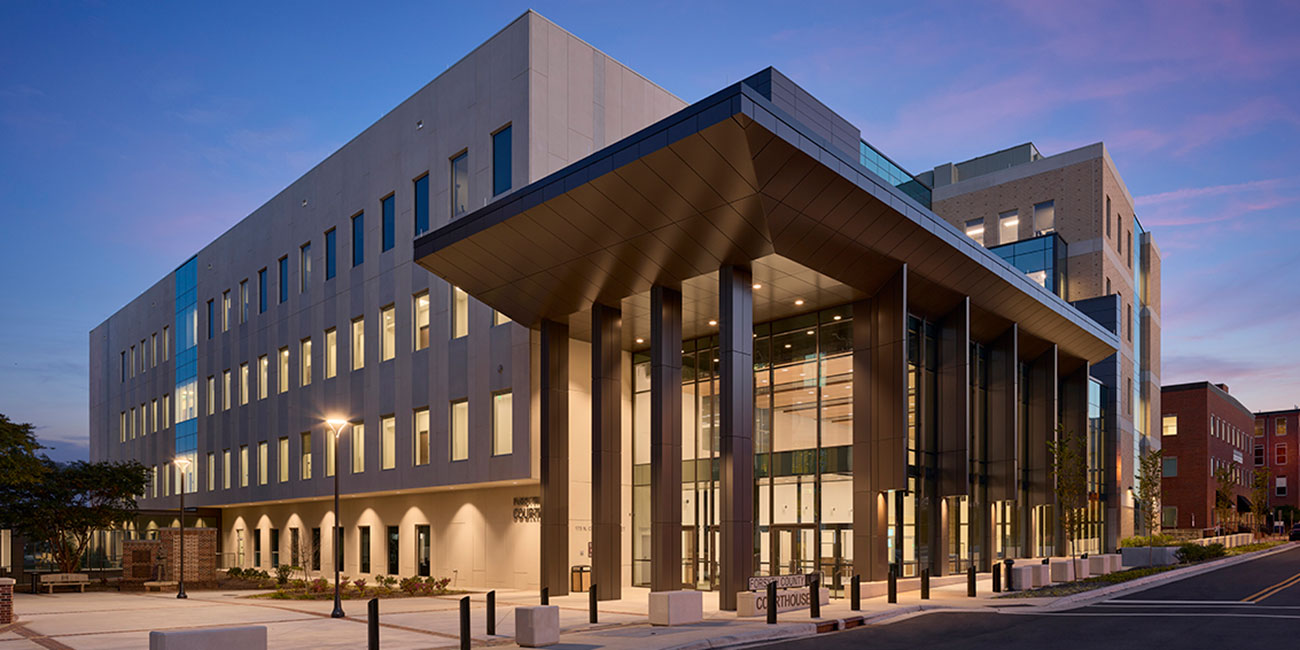
In a city redefining itself beyond its tobacco-era legacy, this six-story concentric Forsyth County Courthouse serves as a contextual yet forward-looking civic landmark that transforms industrial heritage into a setting centered on health, wellness, and long-term community sustainability. Situated within a government campus of repurposed warehouses and the County Jail, the design acknowledges its historic surroundings while fostering psychological comfort, dignity, equity, and accessibility for all users. Wellness-supportive strategies, most notably abundant daylight and continuous visual connections to the city, reduce stress, enhance mental clarity, and promote orientation and trust within what is often a high-pressure legal environment. A central public space unifies the building through clear wayfinding and intuitive navigation, minimizing confusion and anxiety to create a welcoming, cognitively supportive experience for visitors and staff alike. Importantly, the courthouse also serves as a setting where families navigate life-defining moments, like custody decisions, adoptions, reunifications, and civic milestones. By creating an environment that prioritizes calm, clarity, and dignity, the design helps reduce emotional strain and supports healthier outcomes for individuals and families during vulnerable times.

A bridge inspired by historic warehouse connectors physically links the courthouse to existing facilities, reinforcing operational efficiency, adaptive reuse principles, and campus cohesion, while balanced security measures maintain safety without compromising personal dignity. The result is a secure, humane, and sustainability-minded justice environment that strengthens both community trust and family well-being.
Transforming a Historic School into a High-Performance Campus

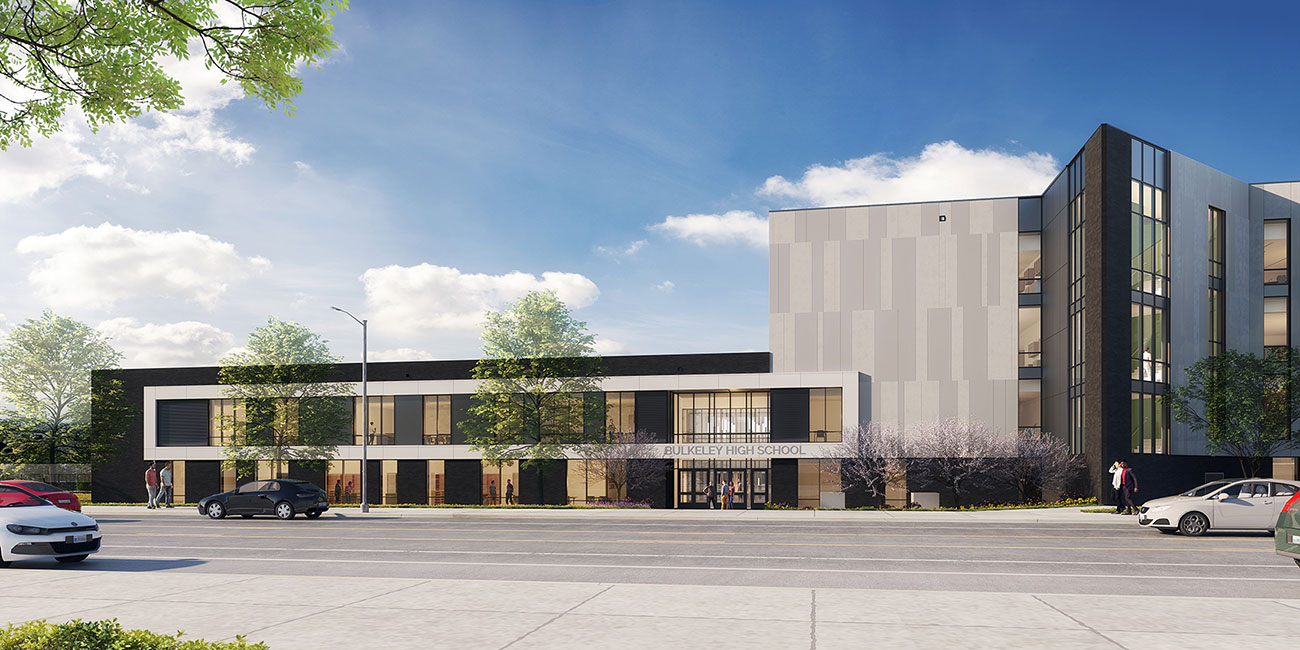
The renovation of Bulkeley High School, welcoming students in January 2026, transformed the historic campus into an “as-new,” state-of-the-art facility aligned with health, wellness, and sustainability. Grounded in high-performance design, the 585,000-square-foot renovation and additions support occupant well-being and long-term environmental responsibility. A high-performance building envelope, featuring 52,000 square feet of Swiss Pearl high-density fiber cement panels and 20,000 square feet of metal panels installed via a rainscreen system by ECO Cladding, enhances durability, moisture control, thermal resilience, indoor comfort, and energy efficiency. Expanded window areas maximize daylight, reducing artificial lighting and energy use while creating a healthier, more engaging learning environment. All-new, energy-efficient mechanical, HVAC, and electrical systems improve indoor air quality, optimize ventilation, and lower carbon impact. Comprehensive abatement of asbestos, PCBs, and mercury from the original 1926 structure further ensures a safe environment. Site upgrades, including improved athletic fields, tennis courts, parking, and circulation, enhance campus wellness and operations. Supported by building analytics consulting, the project meets Connecticut High Performance Building Standards and leverages Eversource Energy-efficiency incentives, positioning the school as a forward-looking model for sustainable, health-centered public education design.


Glastonbury, CT, January 26, 2026 – The S/L/A/M Collaborative (SLAM) is pleased to announce the promotion of five individuals to Associate Principal, twelve to Senior Associate, and five to Associate. These promotions recognize the professional excellence, leadership, and commitment that each honoree brings to the firm and our clients.

New SLAM Associate Principals

Emily Burton, Associate Principal, Business Development – Atlanta
With 13 years of experience in architecture and business development, Emily strengthens our sports practice and drives firm-wide growth. She connects client vision with market realities, using architectural training, and a strategic approach to building lasting relationships. As a mentor to technical teams, Emily aims to bring a data-driven mindset to developing metrics and insights. A former D1 student athlete, Emily holds a Bachelor of Architecture from Georgia Tech.

Dana Christ, Assoc. AIA, Associate Principal – Glastonbury
Since joining SLAM in 2001, Dana has become the firm’s national subject matter expert in Diagnostic and Interventional Radiology, Radiation Oncology, and Compounding Pharmacies. A leader in equipment coordination for complex, technology-driven projects, he collaborates closely with vendors and engineering teams from programming through construction to ensure long-term client success.

Emily Sperini, AIA, Associate Principal – Glastonbury
A leader in research-driven lab planning at SLAM, Emily brings 12 years of experience delivering flexible, high-performance laboratory solutions. As a Project Manager and Lab Planner for higher education projects, she provides hands-on leadership in technical documentation and consultant coordination, actively mentors STEM students through the ACE Mentoring Program, and sits on the Board of Directors of the Connecticut Architecture Foundation.

Richard Sears, AIA, LEED AP BD+C, ACHA, Associate Principal – Glastonbury
Rich brings nearly 30 years of experience leading large-scale healthcare projects, including assembling and guiding strong teams at Yale. His work has expanded beyond outpatient facilities to more complex projects, like the Greenwich Cancer Center renovations. A key member of the next generation of the Glastonbury Healthcare team, Rich has led multiple marketing efforts for new clients and remains highly active in the New England healthcare market, consistently building meaningful connections for the firm.

Brian Ericsson, AIA, Associate Principal – Boston
Brian joined SLAM 20 years ago as a technology expert and quickly became a driving force behind our Building Information Modeling standards, many of which still guide the practice today. Over time, he has grown into one of our most respected technical leaders, serving as Technical Lead on Boston’s Studio Core team. Known for leading complex teams to exceptional results, his work on Stonehill’s School of Business and Baylor College of Medicine reflects his collaborative leadership, technical excellence, and commitment to design quality.


Senior Associates

Renée Latulippe (HR, Glastonbury), Alisa Elfman, PLA, ASLA (Landscape Architecture, Glastonbury), Yana Pierzchala, AIA, LEED GA, WELL AP, EDAC (Orlando), Kelly Kleppin, AIA (Orlando), Gabriel Hohag, AIA, LEED GA (Philadelphia), Meghan Mendes, NCIDQ, IIDA (Interiors, Glastonbury), Ayca Ata, Ph.D., LEED GA (Glastonbury), Matthew Hildreth, AIA (Denver), Brittany D’Oddio, NCIDQ (Providence), Ellie Hart, AIA, EDAC (Boston), Kathryn Packtor, PLA, ASLA (Glastonbury), and Ross McCoy, AIA, ACHA, EDAC (Glastonbury)


Associates

Cole Peterson, AIA, NCARB (Glastonbury), Brittany Blinn (Providence), Ryan Oldach (Philadelphia), Nazeer Kutty, AIA, Fitwel (Atlanta), and Brian Ott, AIA (Denver)

At SLAM, our people are the foundation of all that we do — and today, we’re celebrating the return of an individual who’s long embodied that very spirit. We’re thrilled to welcome Amy Samuelson back as both Principal and our new Chief Talent Officer (CTO).

For many SLAMmers who’ve had the privilege of working alongside Amy, her return feels more like a homecoming than anything else. During her time at SLAM, she left a lasting impression on our people, our culture and the work we delivered, leading projects with creativity and empathy, and mentoring colleagues with her signature enthusiasm and vision.

Following a two-year tenure at another firm, Amy now rejoins SLAM with a broader view of the industry and a renewed passion for people and culture — the very elements that define who we are and where we’re headed. With this new chapter, as Chief Talent Officer, Amy will serve on the Firm Core Team, leading efforts that place our people at the center of SLAM’s continued growth. Her focus will include talent strategy, recruitment, career progression, and firmwide engagement, ensuring that every team member feels supported, inspired, and empowered to thrive.

This role represents more than just a leadership position, but rather a reflection of SLAM’s ongoing evolution as a people-first, purpose-driven design firm. Under Amy’s direction, SLAM is deepening its commitment to professional development, leadership growth, and cross-disciplinary collaboration across all studios.

With a look to the future, Amy shared: “I’m grateful for this incredible opportunity and excited to be back at SLAM. I look forward to leaning into my passion for people, recognizing that my ambitions are deeply connected to helping fellow SLAMmers get the most out of their experiences and positively impact their careers.”

Amy’s return comes at a pivotal time for SLAM — one defined by momentum, connection, and expectation. We’re proud to welcome Amy back and can’t wait to see how her leadership helps shape SLAM’s culture and community for years to come.

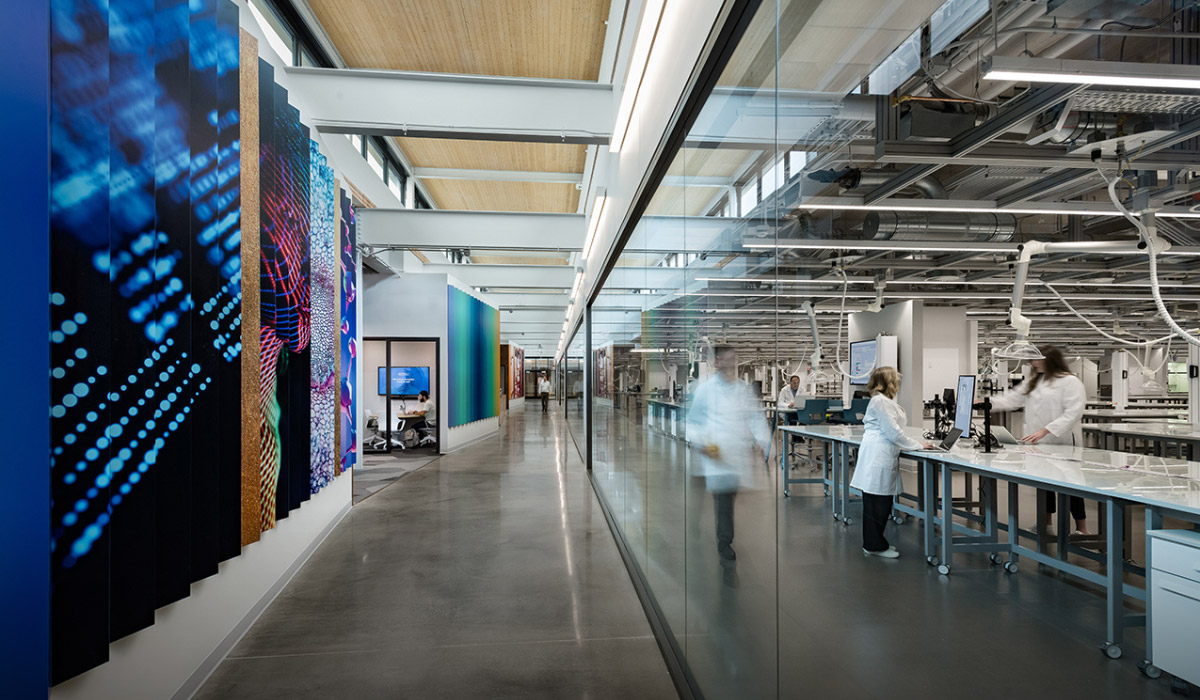
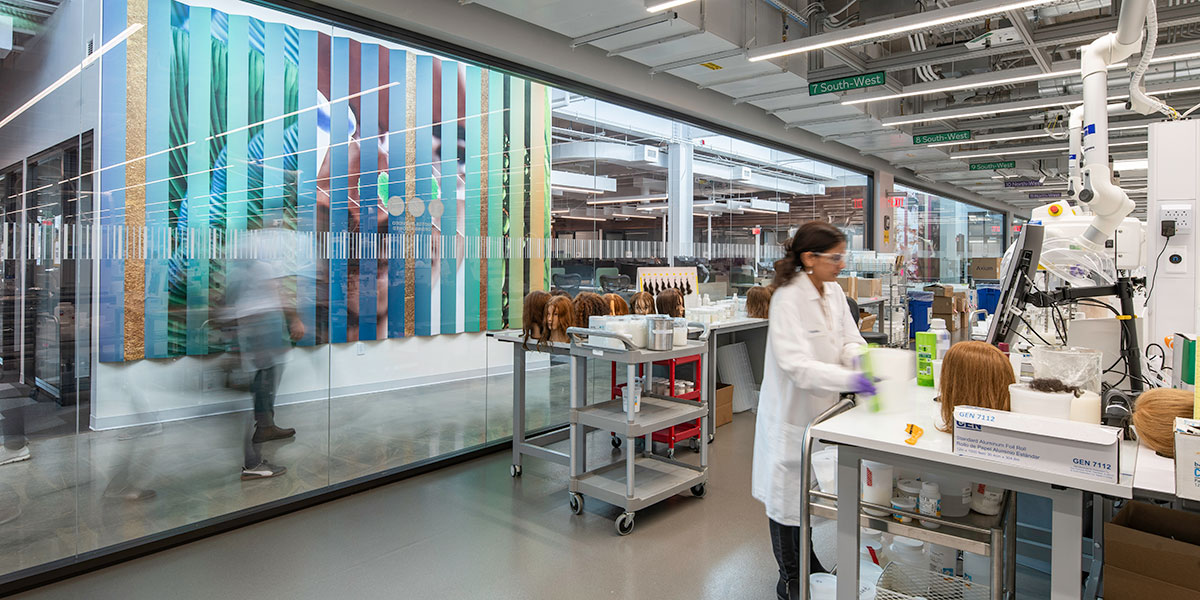
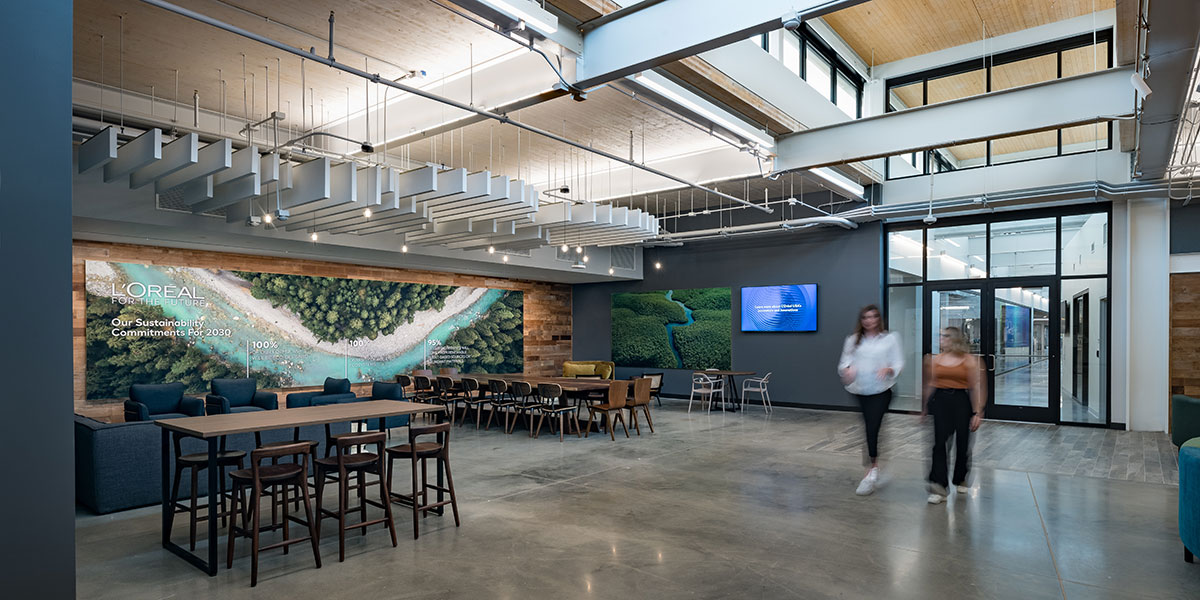
MIAMI, FL, November 7, 2025 – Please join us in congratulating L’Oréal and SLAM on their recognition as one of two finalists, receiving High Honors at this year’s SEFA Lab of the Year Awards competition!

It’s with great pride and immense pleasure that we celebrate the accomplishments of all L’Oréal and SLAM team members who contributed to achieving this remarkable milestone.

This year, the top honor was awarded to Emory University’s Health Sciences Research Building II, designed by HOK. SLAM extends sincere congratulations to Emory University and HOK for their outstanding achievement and well-deserved recognition.

The award recognized L’Oréal’s Research & Innovation (R&I) Center in Clark, New Jersey, a facility that strengthens the company’s capacity to advance the scientific and technological research behind products and services designed to meet the diverse beauty expectations of consumers in the U.S. and around the world.

With the R&I Center focused on beauty innovations across hair, skin, and makeup categories, L’Oréal continues to pioneer new discoveries through strategic scientific fields, like Green Sciences and Beauty Tech.

As the international organization that annually bestows the industry’s most prestigious laboratory award, the Scientific Equipment and Furniture Association (SEFA) received more than 30 submissions for consideration this year. Of these, 10 deserving organizations were accepted into the competition, with two finalists ultimately emerging: L’Oréal/SLAM and HOK.

From the very beginning, this year’s SEFA competition required an extraordinary strategic effort—one that positioned L’Oréal as an organization with unique project drivers, a rich history, unmatched industry leadership, and an end-to-end product development process (from discovery to retail shelves), all under one roof.

The Lab of the Year project has been a significant undertaking with outstanding results that have made a lasting impact on L’Oréal. As the company’s community fully embraces the new R&I Center, employees are thriving in this state-of-the-art facility. To learn more about the project, read the case study, outlining the project’s details and objectives.

Congratulations to L’Oréal and SLAM on this exceptional recognition and for representing innovation, collaboration, and excellence on a global stage.

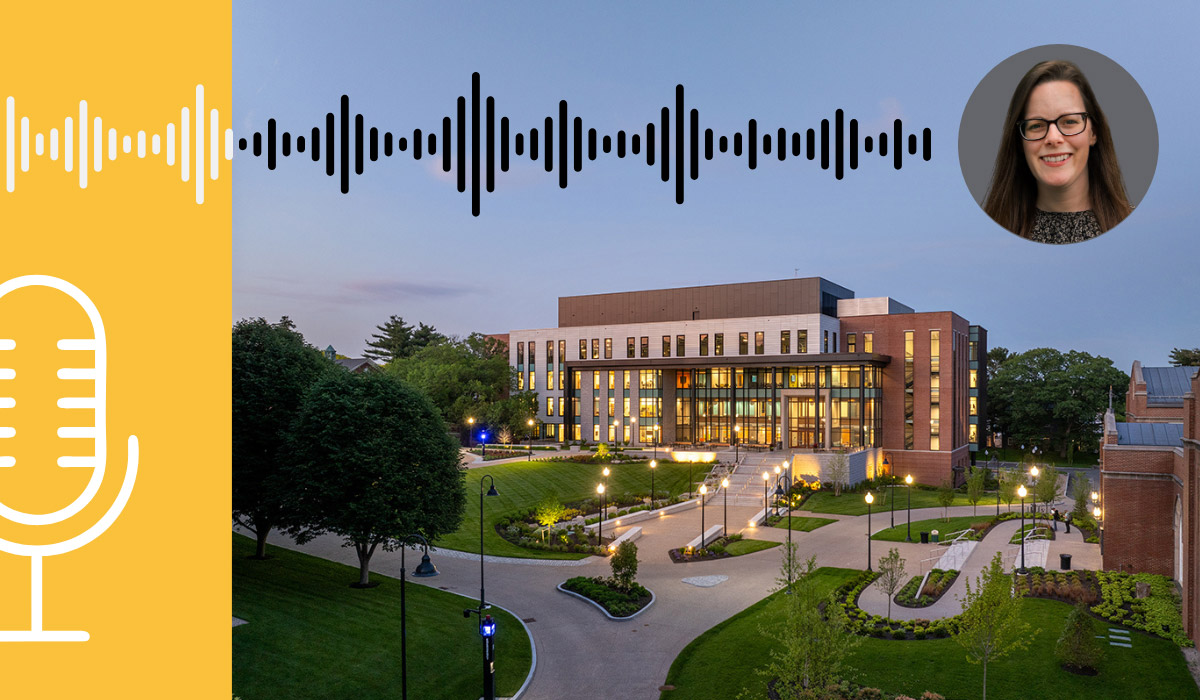
SLAM Principal, Karen Parzych, recently joined Carlota Rebelo on The Urbanist, a podcast by Monocle, to discuss how thoughtful design is helping to address one of the most persistent challenges in the U.S. today—the national nursing shortage.

As healthcare systems evolve and the demand for skilled nurses continues to grow, colleges and universities are responding by expanding and reimagining their nursing and health sciences programs. However, growth requires more than just enrollment; it necessitates spaces that inspire, educate, and prepare the next generation of healthcare professionals. That’s where architects come in.

In her conversation with The Urbanist, Karen explores how SLAM is collaborating with institutions to design state-of-the-art educational facilities that reflect real-world healthcare environments. These spaces not only enhance teaching and learning, but also attract top faculty and students—proving that, in many cases, “if you build it, they will come.”

Karen highlights several recent SLAM projects that bring this idea to life, indicating how design innovation supports both academic excellence and the healthcare workforce of the future.

Listen to the full conversation on The Urbanist podcast, and hear more about how architecture can be an influential tool in solving today’s nursing shortage while shaping tomorrow’s healthcare leaders.


— Coming Soon —

Medical Center of the Rockies (MCR)
Opening Spring 2026

Precision in Progress: Medical Center of the Rockies (MCR)

MCR is entering its final six months of construction in Loveland, CO, marking a key milestone in SLAM’s three-phase master plan launched in 2004. As UCHealth’s Northern Colorado flagship, the $280M Phase 2 expansion adds an inpatient tower, expanded ED, imaging, cardiac services, and a full cancer center.

Care and craftsmanship are evident as the tower rises—from crisp masonry to seamless material transitions. The architectural centerpiece—East ED, North glass wedge, and West entry—embodies an elegance that guides and welcomes. With the crown and canopies taking shape, SLAM moves closer to unveiling the sunken garden, a refined arrival point anchoring this end of campus.

Driven by SLAM’s One Firm culture, our national team united top talent from across the country to deliver this vision. Kudos to the team as interiors come to life and the project integrates into its surroundings.


Shattuck Hospital, Relocation/Renovation

Transforming Healthcare in Boston

SLAM is proud to partner with the State of Massachusetts, Division of Capital Asset Management and Maintenance (DCAMM), the Executive Office of Health and Human Services (EOHHS), the Department of Public Health (DPH), the Department of Mental Health (DMH), and the Department of Corrections (DOC) on the $275M transformation of the former Newton Pavilion into the new Shattuck Hospital – a modern, integrated medical facility in the heart of downtown.

This complex renovation of a 1970s-80s-era structure focuses on enhancing the urban environment, patient experience, and security, while meeting the needs of public health, mental health, and correctional care—all under one roof.

Key features include: a welcoming, park-like arrival; human-centered urban design; secure, light-filled patient spaces; efficient, integrated care models; increased federal funding opportunities.

More than just a renovation, this project redefines how public healthcare facilities serve our communities.


Baylor College of Medicine Construction

Baylor College of Medicine
Opening June 2026

SLAM and Baylor College of Medicine Reveal Design for the Lillie and Roy Cullen Tower

At 503,000 SF and 11 stories, the Baylor College of Medicine Lillie and Roy Cullen Tower will be one of the largest and most advanced medical education buildings in the country—uniting education, research, and clinical care under one roof. A facility designed to foster collaboration and innovation, the tower features cutting-edge research labs, immersive simulation and skills training environments, a vibrant, community-centered courtyard, and a seamless integration of education and healthcare practice.

A new campus that marks a bold step forward in shaping the future of medical discovery and training, the Lillie and Roy Cullen Tower Health Sciences Tower is scheduled to open in 2026.


Torrington Middle School and High School Aerial

Torrington Middle School and High School
Opened 2025

Reimagining Education Through Architecture

With the consolidation of Torrington’s high and middle schools being long overdue, the community remained enthusiastic and fully engaged, bringing bold aspirations to the table. On the heels of COVID, SLAM worked closely with the town and state to deliver a flexible, future-ready facility inspired by local industry, arts, and landscape. The design features a central courtyard for learning and events, daylight-filled spaces, and a layout that clearly separates active and quiet zones. Public areas like the gym and auditorium are easily accessible while maintaining student privacy. The architecture moves beyond traditional school models, embracing dynamic forms that reflect the evolving nature of education.


Penn State, Nursing Sciences Building
Opening Fall 2025

From Vision to Reality – Shaping the Future of Healthcare Education

Exciting progress is underway at Penn State, where SLAM is building one of its most versatile and innovative classrooms yet. Designed to accommodate up to 200 students, the space supports active learning and traditional instruction, with the flexibility to divide into two 100-seat environments. At the front of the room, dual healthcare patient headwalls equipped with video and audio recording capabilities will enhance in-room demonstrations and bedside simulation training. A dedicated simulation room at the back further supports immersive, hands-on learning. Flat-panel displays around the perimeter enable small group collaboration, while adjacent pre-function space offers students areas to study and connect. Once complete, this forward-thinking facility will not only support enrollment growth but also provide a true “home” for nursing education at Penn State.


Gene Torone President Emeritus SLAM Construction Services

After 29 incredible years with SLAM Construction Services (CS), Gene Torone will be transitioning his role as President to President Emeritus. Having been instrumental in establishing our CM division in 1996, Gene has created the success and reputation that we hold today. Gene will shift away from day-to-day operations, continuing to focus on business development and support key client projects and existing relationships.

We’re excited to announce that Matt Ciaglo has been appointed as the new President of SLAM CS. Matt has been with SLAM for 25 years, has strong, leadership qualities, and deep experience across all SLAM markets. As a licensed architect, Matt has a unique perspective for carrying forward the Plan Design Build vision that Gene started.

Congratulations to Gene and Matt as a new era at SLAM CS begins!

San Antonio Federal Courthouse Exterior

Boston, MA, June 5, 2025 –SLAM is pleased to announce that the AIA Justice Facilities Review Jury has selected the San Antonio Federal Courthouse project as a 2025 recipient of the AIA Justice Facilities Review Award. Congratulations to the entire team on this well-deserved recognition.

Held at the Omni Boston Hotel in the Seaport District, the second annual AIA Awards Gala offered those in attendance, from SLAM and our design partner, Lake Flato Architects, a valuable opportunity to connect with fellow professionals and industry leaders, draw inspiration, and explore how creativity and innovation are reshaping the future of architecture and design.

It was a night to remember as the architectural community came together to celebrate excellence in the field. The evening honored standout talent and groundbreaking advancements, all leading up to the thrilling live announcement of this year’s winners.

Click to learn more about the San Antonio Federal Courthouse project.

If you look up the mission statement of any medical school, you’ll likely find common themes that are similar to the following: training the next generation of physicians, advancing knowledge, and fostering innovation through research. You may even find that service to the surrounding community, region, or world is also included—with the intent and goal of improving patient outcomes. While these mission themes are broad and require intentionality in curriculum design, faculty recruitment, student admissions, and accreditation documentation, the way in which a medical school building functions can have a profound impact on how the mission is realized. With SLAM having spent the last two decades working with dozens of colleges of medicine across the country, below are some observations about the role that a physical facility can play in the successful execution of each mission:

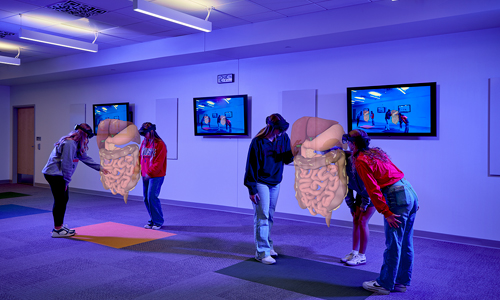
Duquesne University Virtual Anatomy Lab
Duquesne University
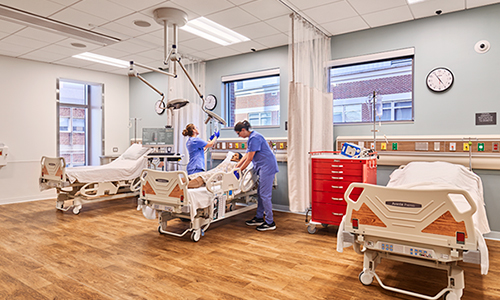
University of North Carolina Simulation Suite
UNC


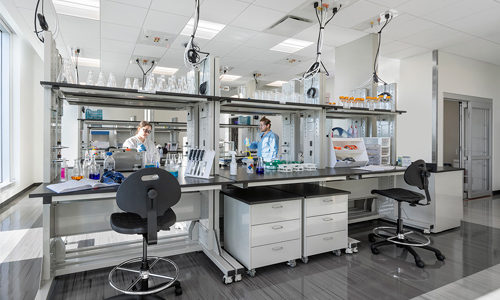
Sam Houston State University Medical Research Lab
Sam Houston State University
University of Houston Active Learning Flexible Classroom
University of Houston
  • Research innovations in the built environment take many forms. These range from adaptable wet bench laboratories that can evolve alongside changing grant funding and faculty research initiatives—like those at Sam Houston State University — to clinical research spaces, translational research collaboration zones, and applied science facilities, like biomechanics and human performance labs.
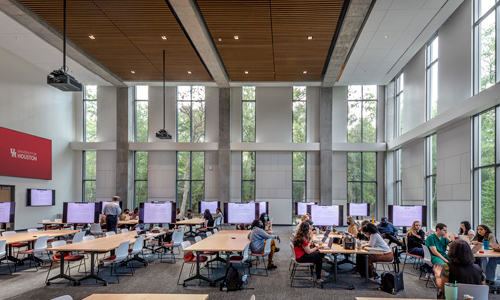
  • Service to the community requires intentional programming and planning. For instance, at the Tillman J. Fertitta Family College of Medicine at the University of Houston, a large flexible active learning classroom on the first floor, doubles as a community event space.


Beyond just the outward missions of medical schools, there has been an increase in priority for programs to support the mental health and well-being of students. Medical school is an extremely stressful and taxing time for students. That’s where the programming, planning, and design of the medical school building can help play a role in caring for the whole student – body, mind, and spirit – all while they prepare for a lifetime of learning, innovation, and service in the medical field.


Dell Medical School Social Stair
Dell Medical School
University of Minnesota Social
University of Minnesota
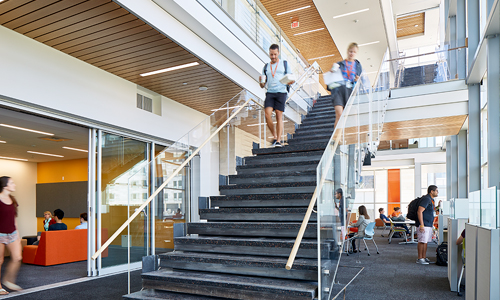
  • A sense of belonging is key to wellness, and designing space to support fostering connection is important. The research of Daniel Chambliss, author of the acclaimed book, How College Works, reveals that success in college is driven more by relationships than by curriculum or intellect. Chambliss says, “We say two or three friends; one is critical. If students don’t have friends, the evidence is just really, really strong – the whole game is over.” In medical facility design, fostering opportunities for connection could include the incorporation of Learning Communities, like at Dell Medical School at UT Austin, where designated social lounges and seminar rooms help students connect in smaller groups.
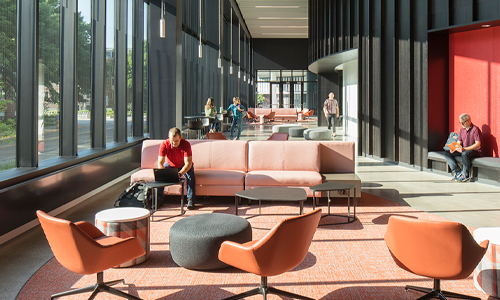
  • Formal and Informal Learning “Seats” are important. Anyone who’s ever been in an ordinary college classroom building has likely seen students sitting on the floor of a hallway, outside their classroom, waiting for the previous class to end so that they can enter. This is where “informal learning seats” become important. Breakout seats, social seats, and study seats, throughout a facility are what give students a place to be when not in class. Whether it’s about getting some work done, charging their devices, having a snack, or socializing with a friend, a good rule of thumb for a classroom building is that the informal learning seat count should be equal to at least 20-30% of the formal learning seat count in the building. This means that a building with 1,000 classroom seats should have at least 200-300 study, social, and breakout seats in total. Some programs far exceed this metric. At the University of Minnesota Health Sciences Education Center, which serves as the inter-professional home for five disciplines, including medicine, the formal to informal seat ratio was a full 1:1. Over 1,000 classroom seats are matched with over 1,000 study, social, and breakout seats to create a vibrant hub of inter-professional collaboration.


Duke University Medical School Terrace
Duke University
Emory University Medical Education Building Fountain
Emory University
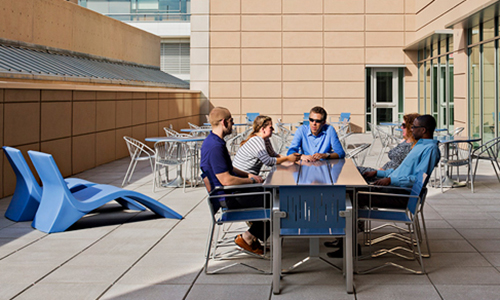
  • Every student has unique preferences, learning styles, study habits, and social capacities. Providing a variety of study and social spaces for students is key. For example, if a student wants to book a private room for quiet study, then join friends in the social lounge to watch a football game while eating lunch, followed by some additional studying in the bustling lobby or café, giving them options will enhance their experience. At Duke University School of Medicine, an exterior terrace provides space for students to relax and get some fresh air, which is a great transition to the next point:
  • Caring for the body and spirit, not just meeting the conditions for intellectual growth, is critical to the medical school experience. At our core, humans are simple creatures. We want access to daylight, and to feel the sun on our face. We want delicious, nourishing food. We want the chance to move our bodies, to close our eyes, calm our minds, and meditate on the things that matter to us. In medical school design, this means providing spaces for reflection – to connect with nature – maybe somewhere for individual prayer or for group yoga. Every student survey we have conducted has asked for a café, a smoothie bar, or a coffee shop on the premises. At Emory University School of Medicine, an outdoor fountain provides a moment of calm, and a quad formed by the building creates a place for groups to gather. At Xavier University College of Osteopathic Medicine, currently in design, a chapel is incorporated in alignment with the Jesuit tradition, along with an inter-faith reflection room. By addressing the physical and spiritual needs of students, they are better prepared for the intellectual challenge of medical school.


When the built environment is intentionally aligned with the mission of medical education, it becomes more than just a building—it becomes a catalyst for learning, discovery, connection, and care, helping to shape the kind of physicians our world needs.