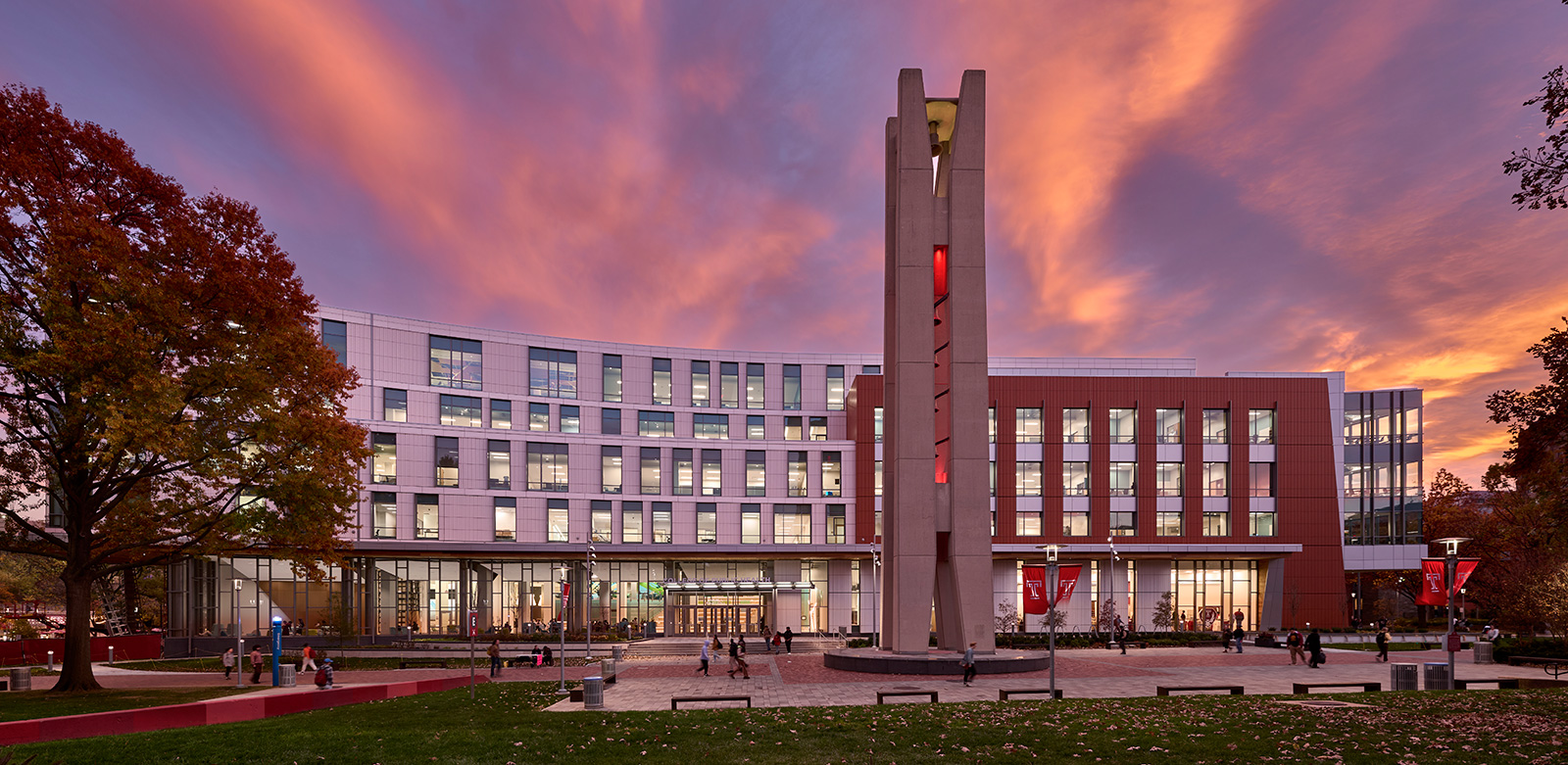
SLAM, in partnership with PZS Architects, led the transformation of Temple University’s 1960s brutalist Paley Library—originally designed with thick solid brick and block walls to protect its collections—into a modern, light-filled, 306,000-square-foot facility for the College of Public Health. Designed to achieve WELL and LEED Gold certifications, the adaptive reuse of this campus landmark creates a building that celebrates the consolidation of public health at the campus nexus while activating and defining a major campus pedestrian walkway and a future central campus quad. Previously spread across 13 buildings, the College now houses six departments and the School of Social Work all under one roof for the first time ever.
![[logo]](https://slamcoll.com/wp-content/themes/sub151-SLAM/resources/images/logo-only.png) at-a-glance
at-a-glanceTemple embarked on the transformation of Paley Hall to create a unified, dedicated home for its rapidly growing College of Public Health and to elevate public health as a central academic and community priority. Before the project, the college was spread across 13 buildings and 2 campuses, limiting collaboration, efficiencies, and visibility. By reimagining the former Paley Library through an adaptive-reuse approach, Temple could retain much of the existing structure while modernizing it into a sustainable, state-of-the-art facility.

This will be the first time in our college’s history that all our academic departments have been together under one roof; there are just so many inherent benefits that come with that.

SLAM worked hand-in-hand with the College to push the envelope with the design of state-of-the-art, light-filled, immersive environments, including a 31,000 SF Integrative Simulation Center simulation center and a 2,000 SF hands-on teaching and research kitchen, as well as innovative active learning classrooms, clinical training spaces, interdisciplinary research suites, and student amenities including a student “loft”. Strategically located at a key campus crossroads, the renovation strengthens interdisciplinary collaboration, activates pedestrian pathways, and underscores Temple’s commitment to public health, wellness, and community engagement.

Design Parti: The College of Public Health activates the urban campus’ primary pedestrian spine while honoring its iconic belltower. The parti sketch shown illustrates a metamorphosis: new life springing from the previously enclosed box.
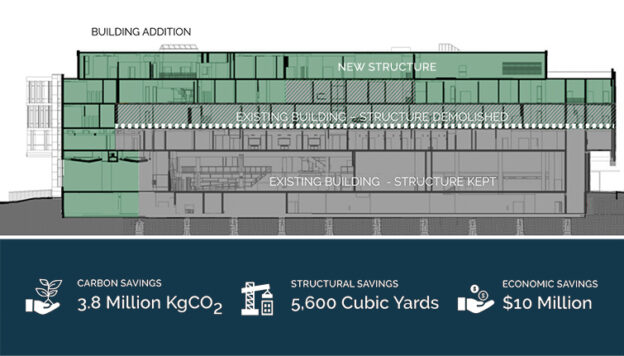
Environmental Impact: As much structure as possible was re-utilized to maximize the project’s positive environmental and economic impact.
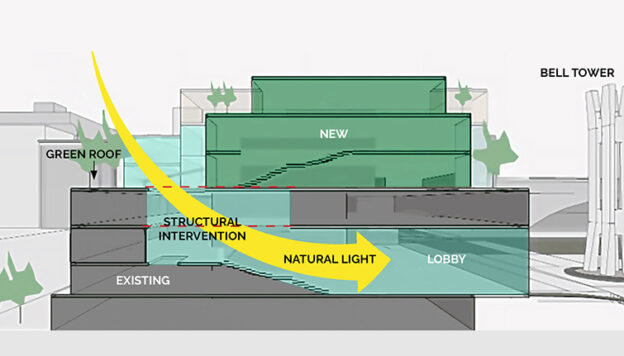
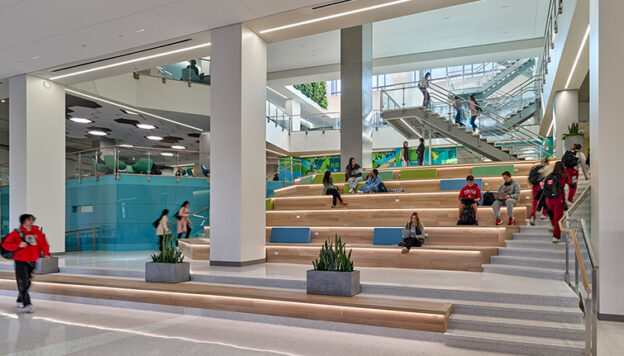
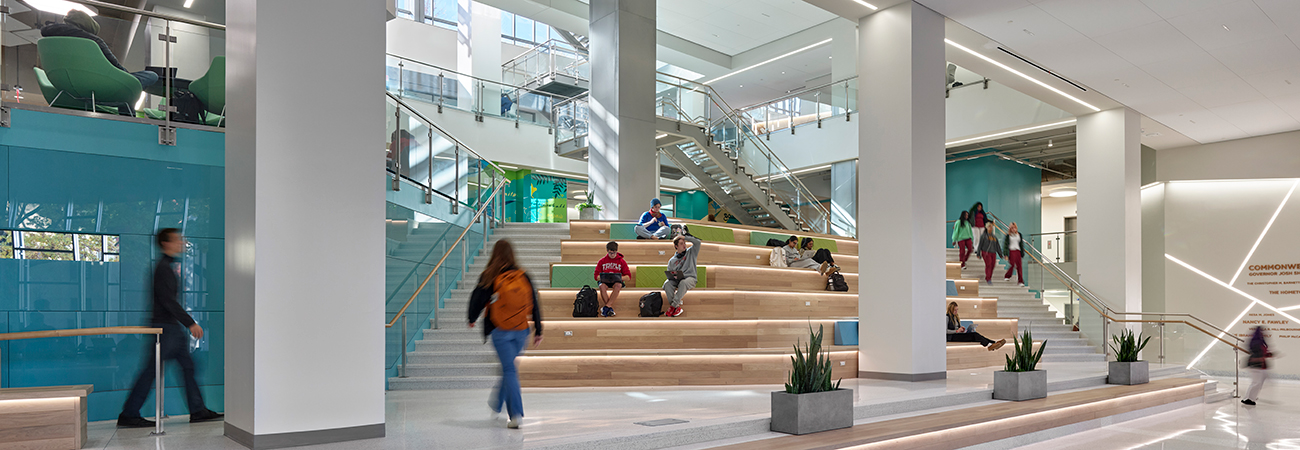
Open Core: To further enhance openness and connectivity, a major architectural intervention carves through the building’s wide existing floor plate, drawing natural light deep into the structure and down to the student loft and lobby below. This transformative move fundamentally improves the daily experience for students, faculty, and staff as they move through and occupy the building. At the heart of this strategy, the central living stairs offer flexible space for studying, social interaction, and presentations, reinforcing the building’s role as an active academic hub.
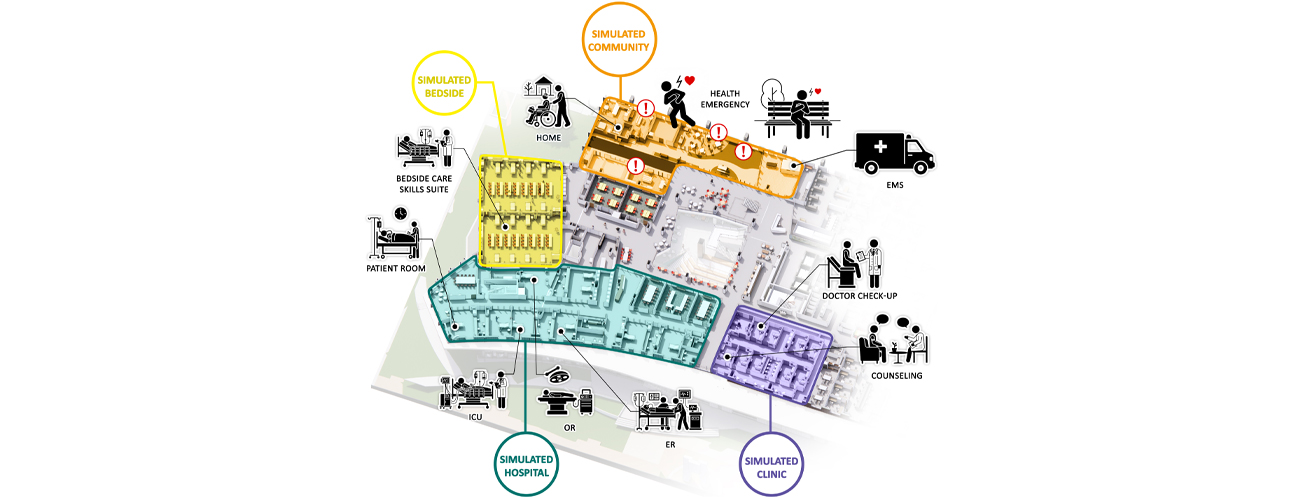
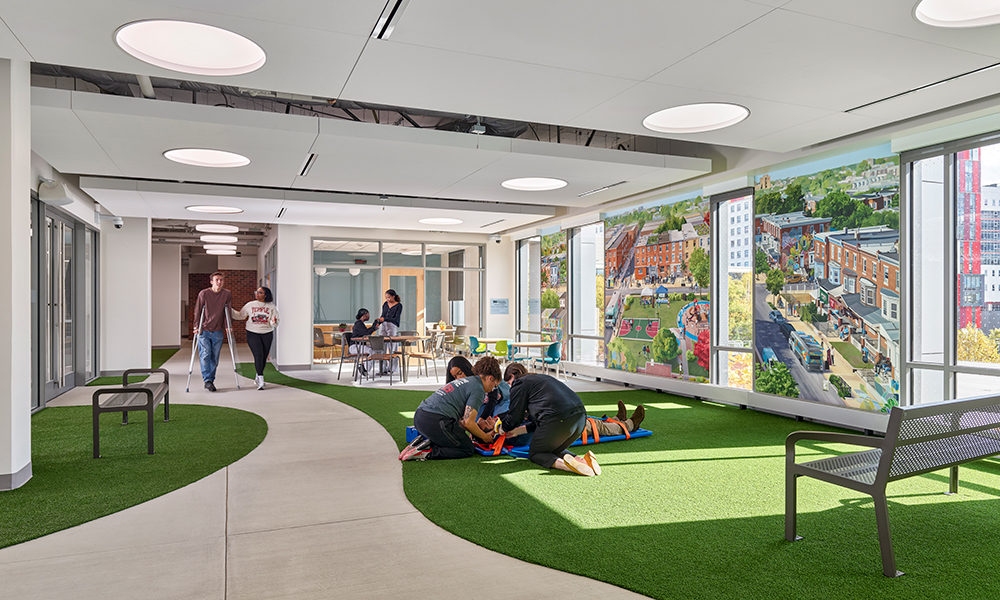
Continuum of Care: Over 31,000 SF on the second floor, the Integrative Simulation Center models the full continuum of care from emergency response and hospital treatment to discharge, rehabilitation, and prevention. The facility serves as a hub for interprofessional health training and includes outpatient and inpatient spaces, EMS and skills labs (featuring a full-scale ambulance simulator), a one-of-a-kind simulated community, and debriefing rooms for the ultimate in experiential learning preparing learners for more intense and critical life experiences where the stakes are low.

Construction: Progression of the original Paley Library skin being removed, the original top floor structure being removed, and horizontal and vertical steel structure being installed.


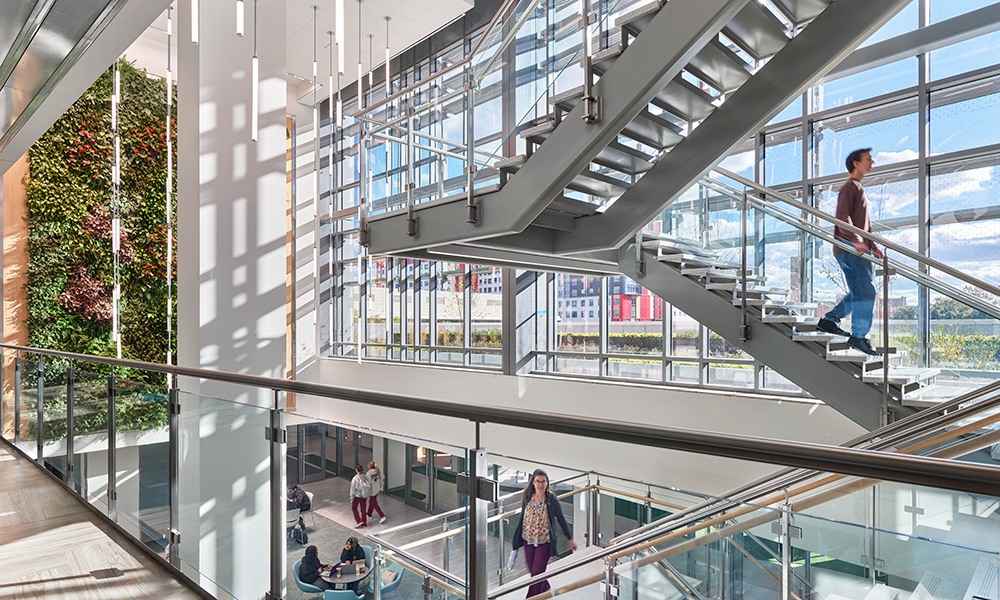
Designed with health and wellness in mind, a two-story living green wall and green roof showcases the biophilic design, enhancing air quality and focus while grounding students in nature through a dramatic, ever growing centerpiece. Central to the open three-story stair with views of campus and downtown Philadelphia. the green wall connects occupants with both nature and place.
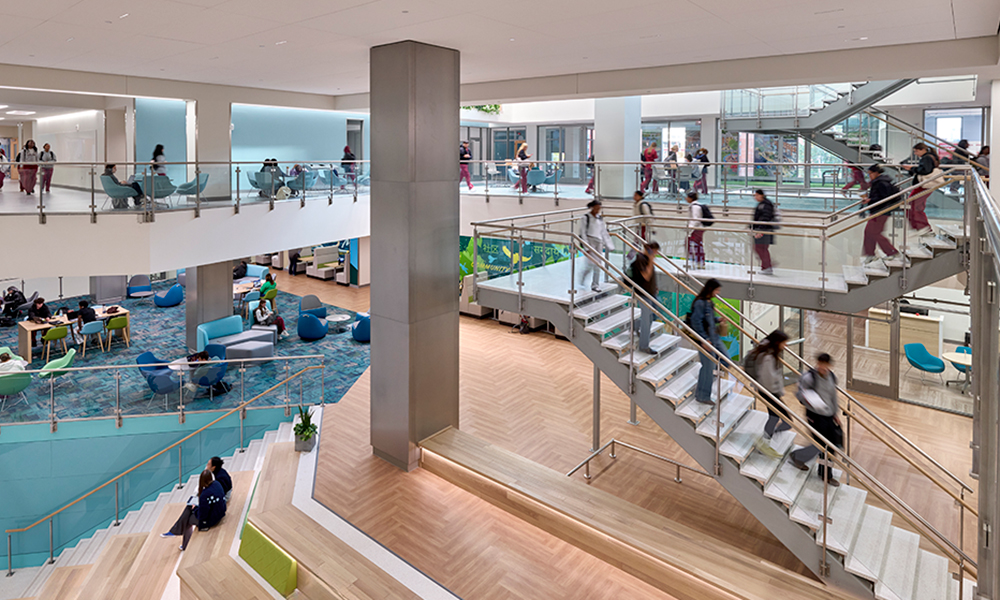
A generous series of open communicating stairs winds through the building.
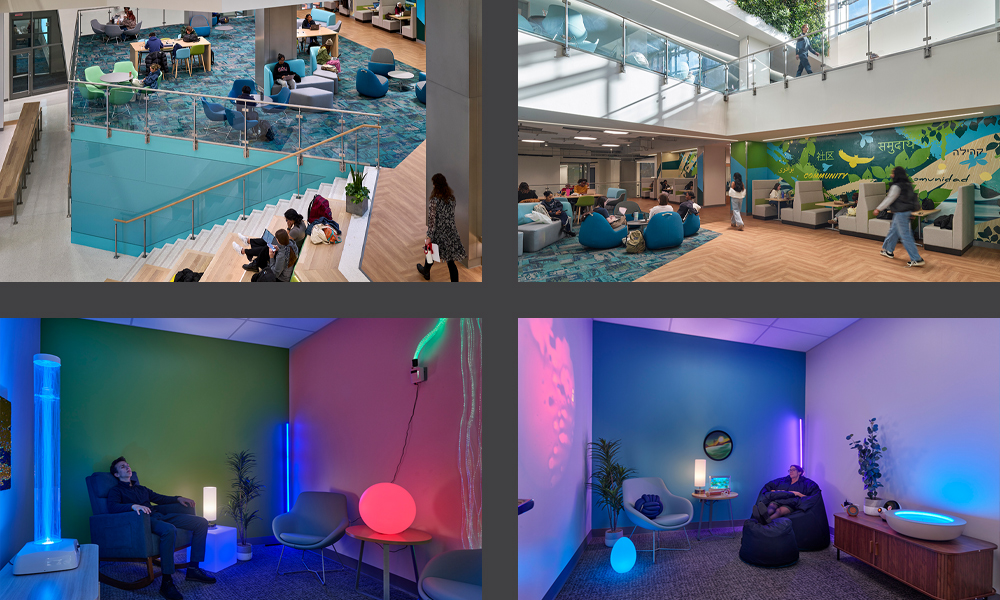
The mezzanine, a student-focused 10,000 SF wellness hub includes a Zen Den, sensory room, student lounge, counseling offices, and group spaces supporting mental health, connection, collaboration, and day-to-day well-being for all students. The word “Community” is written on the walls throughout in many languages , a reminder that everyone belongs.
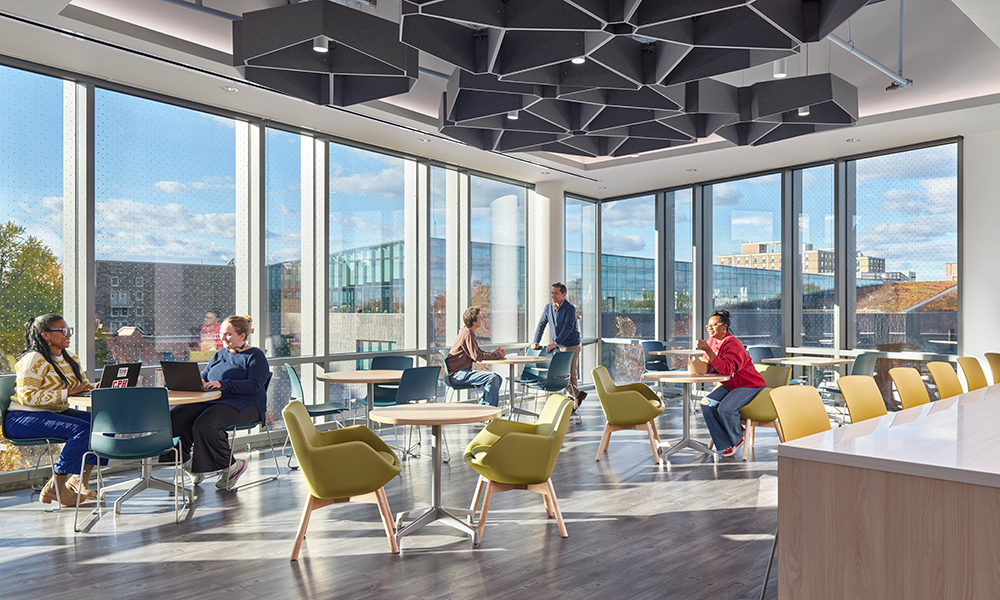
Wellness is woven throughout the building, with shared “we” spaces for faculty and staff—including Wellness Cafés strategically located at the northwest corner of each floor—to encourage interaction and provide alternative settings for work and connection.
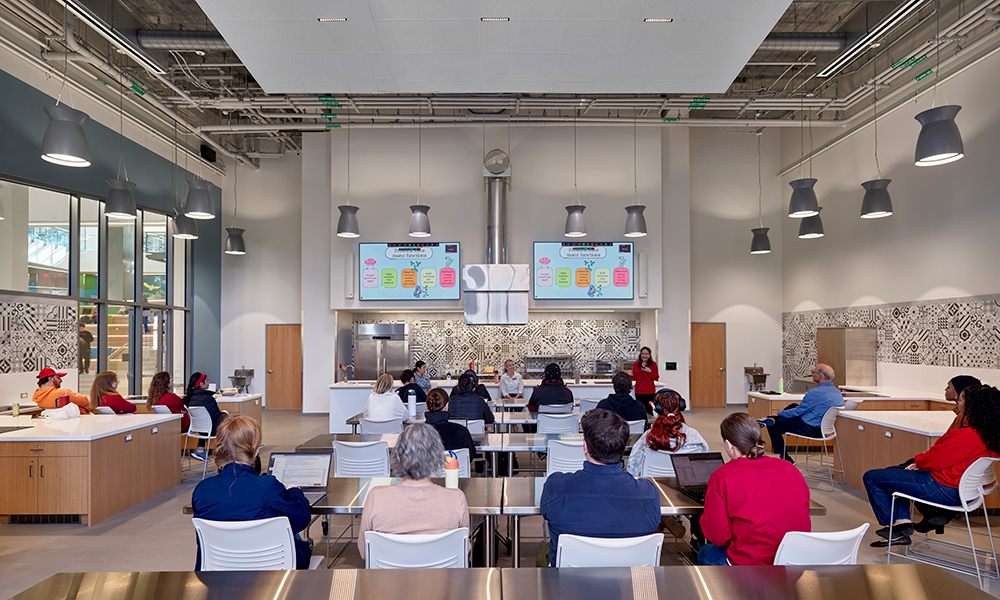
The Aramark Community Teaching Kitchen is a cutting-edge culinary classroom that will serve as a hub for nutrition education, hands-on cooking instruction and community engagement.
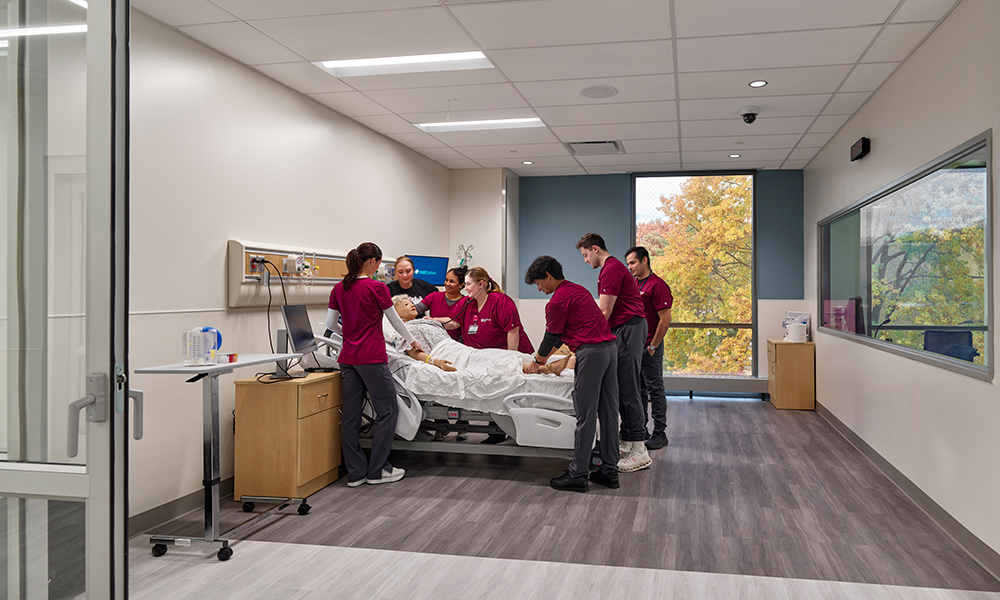
The simulation center includes environments that replicate a hospital, an outdoor park, a restaurant, a home, and an ambulance bay. Students will gain hands-on experience navigating a complete care scenario, from injury and emergency transport to clinical treatment and in-home rehabilitation.
The occupational therapy suite offers a variety of simulated environments where students learn to help patients promote their independence and facilitate participation in daily activities.

The building is designed to achieve LEED certification and will be the first building on campus to achieve WELL certification, promoting a healthy environment for occupants while also supporting environmental sustainability.




![[DT logo]](https://slamcoll.com/wp-content/themes/sub151-SLAM/resources/images/dt-logo-dark.png) design thinkers blog
design thinkers blog
