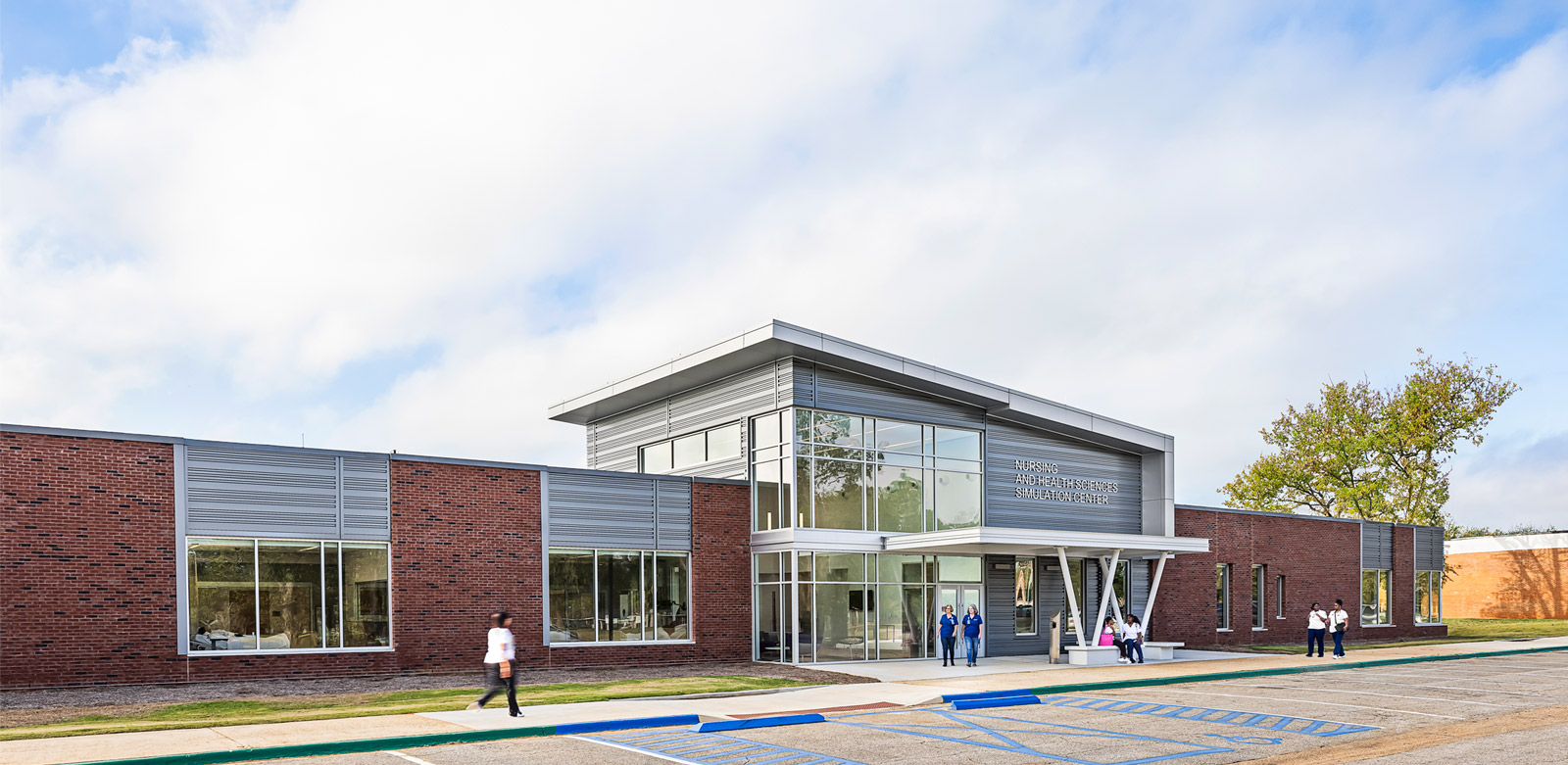
SLAM, in association with McAfee 3, provided programming, planning, and design for Albany State University’s (ALSU) new 17,000 SF Nursing and Health Sciences Simulation Center. This comprehensive, advanced center enhances nursing and allied health instruction in the southwest Georgia region. The facility includes simulation labs (low, medium, and high-fidelity mannikins), control rooms, observation spaces, debriefing space, related hospital simulation spaces, faculty and staff work areas, and building service spaces.
![[logo]](https://slamcoll.com/wp-content/themes/sub151-SLAM/resources/images/logo-only.png) at-a-glance
at-a-glanceSouthwest Georgia faces longstanding healthcare challenges, including provider shortages and limited access to care for rural and underserved communities. Addressing these issues required expanding the region’s healthcare workforce through stronger clinical training opportunities. To meet this need, the program emphasizes simulation-based learning, allowing students to train in realistic clinical environments that mirror hospitals and emergency care settings. These advanced simulation and collaborative learning spaces support interdisciplinary training and help prepare students with the practical skills and confidence needed to serve the region’s healthcare needs.
SLAM addressed the challenge by organizing the facility around a clear, intuitive plan that supports advanced simulation-based learning while fostering visibility, collaboration, and community engagement. A transparent central spine anchors the building as both a recognizable campus gateway and a social learning hub, while flexible, high-fidelity training environments prepare students for real-world, team-based healthcare delivery.
Delivered on time and on budget during the COVID-19 pandemic—a notable achievement amid unprecedented construction challenges—the project provides Albany State University with a state-of-the-art environment to educate and train the next generation of healthcare professionals serving Southwest Georgia.
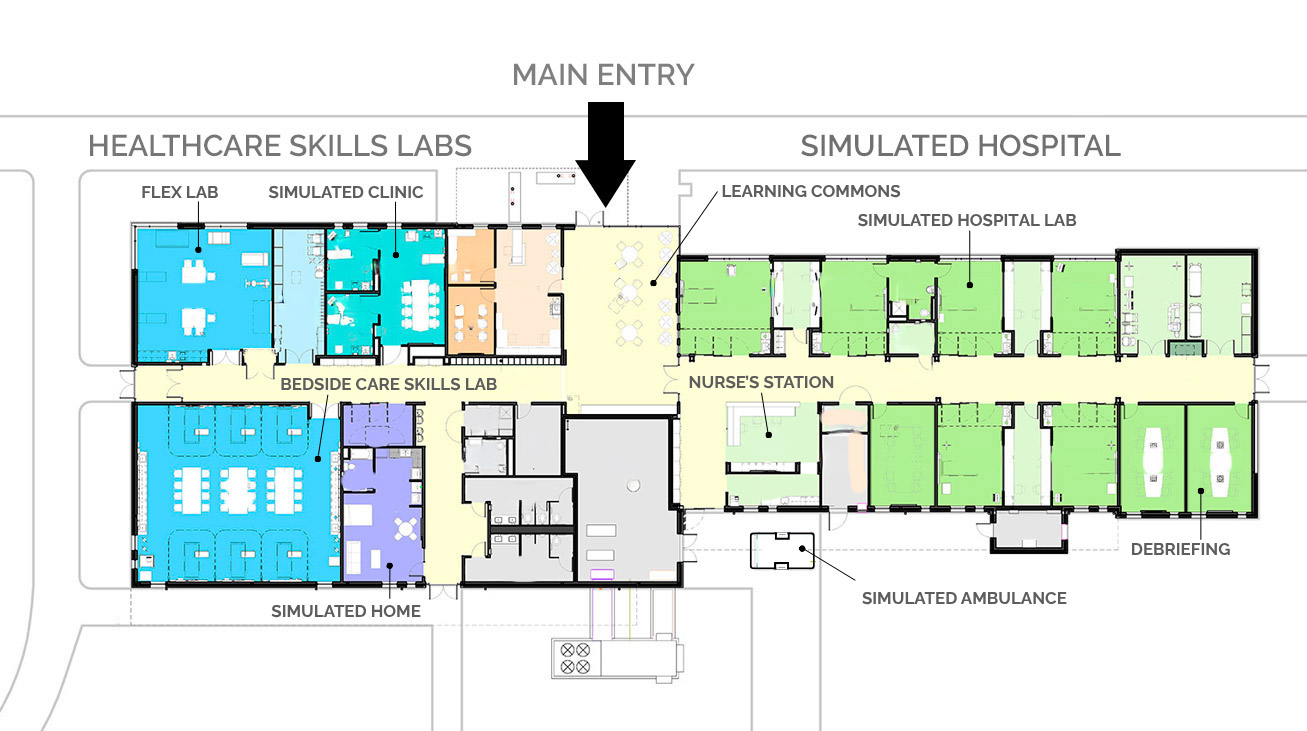
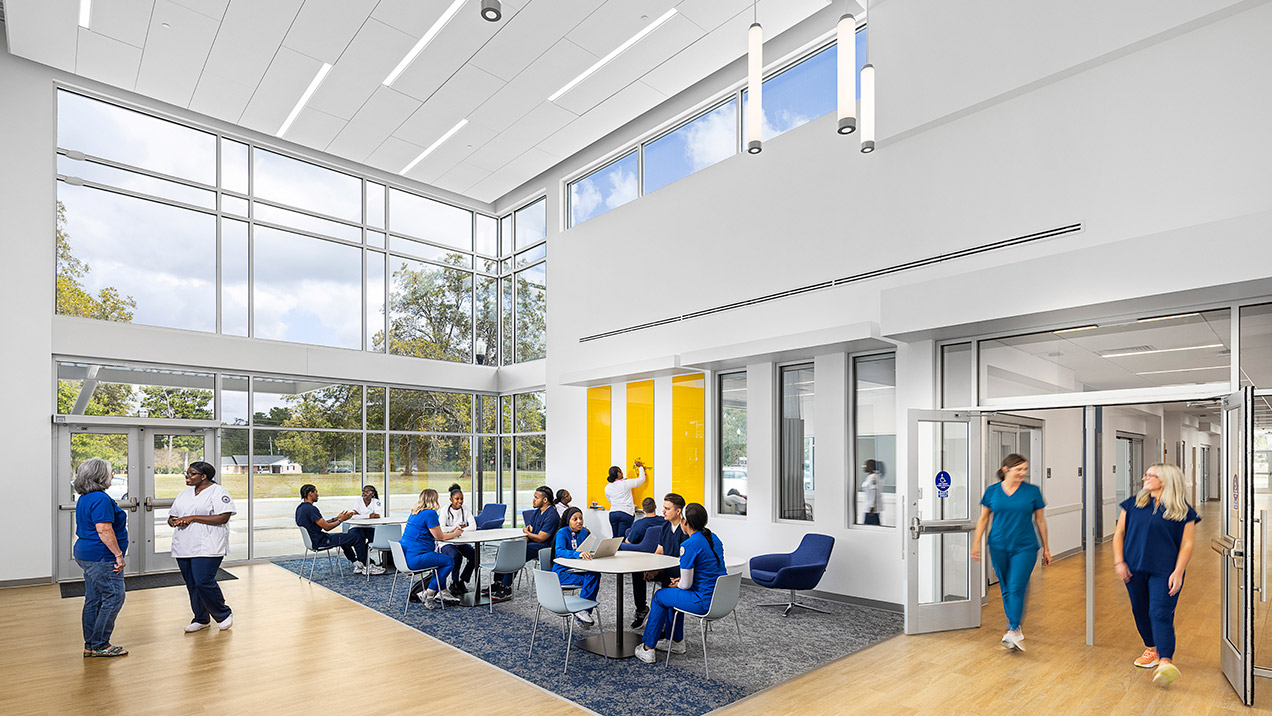
A transparent central spine creates an inviting common area where medical professionals naturally come together to exchange ideas and strengthen relationships, reinforcing the building’s role as a social learning hub. These thoughtfully designed spaces support team-based interaction and mirror real-world healthcare environments, advancing SLAM’s vision for flexible, high-impact training.
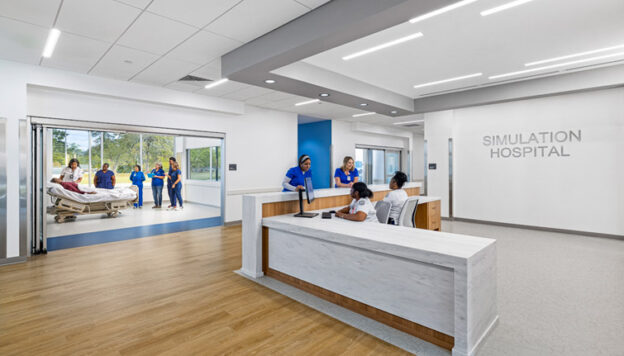
The central Nurse’s Station is organized as a control point within the Simulated Hospital. Strategically positioned to provide direct access to patient rooms and the ambulance training unit, this approach reflects SLAM’s intuitive planning strategy, enhancing simulation realism and operational efficiency.
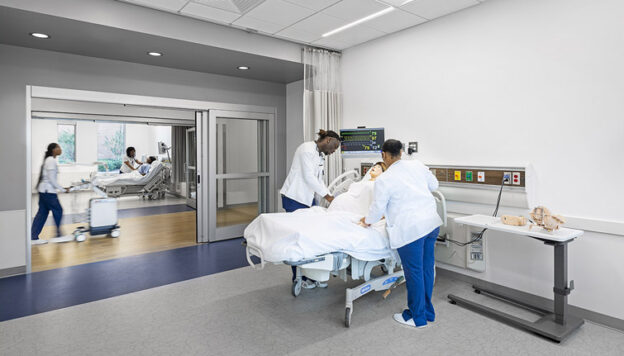
The Simulated Hospital features six advanced simulation labs capable of replicating trauma, ICU, Labor and Delivery, and patient room environments. Organized along an intuitive plan anchored by a transparent central spine, the facility enhances simulation-based learning. Supplied with real hospital equipment and high-fidelity mannikins that model a wide range of clinical conditions, creating flexible training environments that prepare medical professionals for real-world care delivery.
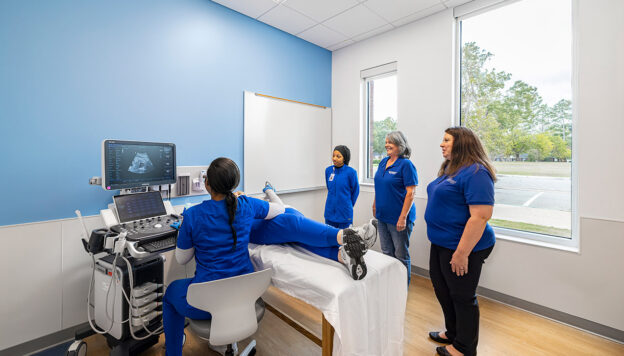
The Simulated Clinic has exam rooms designed to accommodate ultrasound equipment, with finishes that reflect a real medical setting. SLAM’s planning supports advanced simulation and team-based learning.
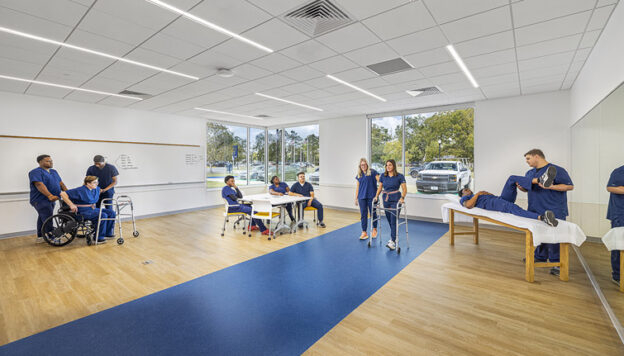
The Flex Lab supports multiple uses, from classroom setups to physical and occupational therapy training, demonstrating SLAM’s strategic approach to flexible, high-performance learning environments. An intuitive layout and adjacent large storage room enable quick reconfiguration, supporting seamless transitions and simulation-grounded education.
The Nursing and Health Sciences Simulation Center provides interdisciplinary simulation experiences in acute care, labor and delivery, and emergency services for the more than 900 incoming and continuing nursing and health sciences students.
Serving multiple professional pathways, including radiology, respiratory care, physical therapy, and nursing, students have access to innovative simulation technology and the support facilities necessary to prepare them for experiential situations and clinical application.


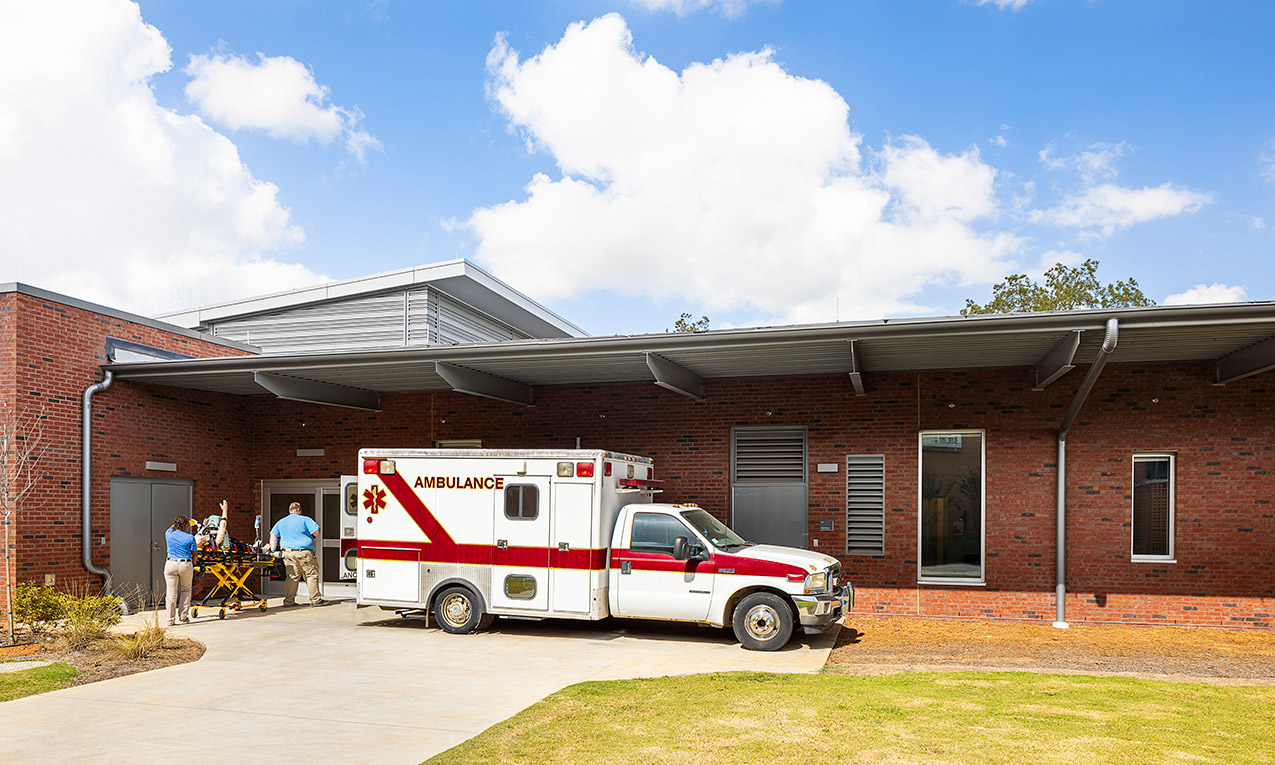
At the ambulance, students begin their journey by practicing emergency assessments and transitions into acute settings. Representing the start of the continuum of care, they sharpen decision-making and prepare for delivering life-saving interventions.
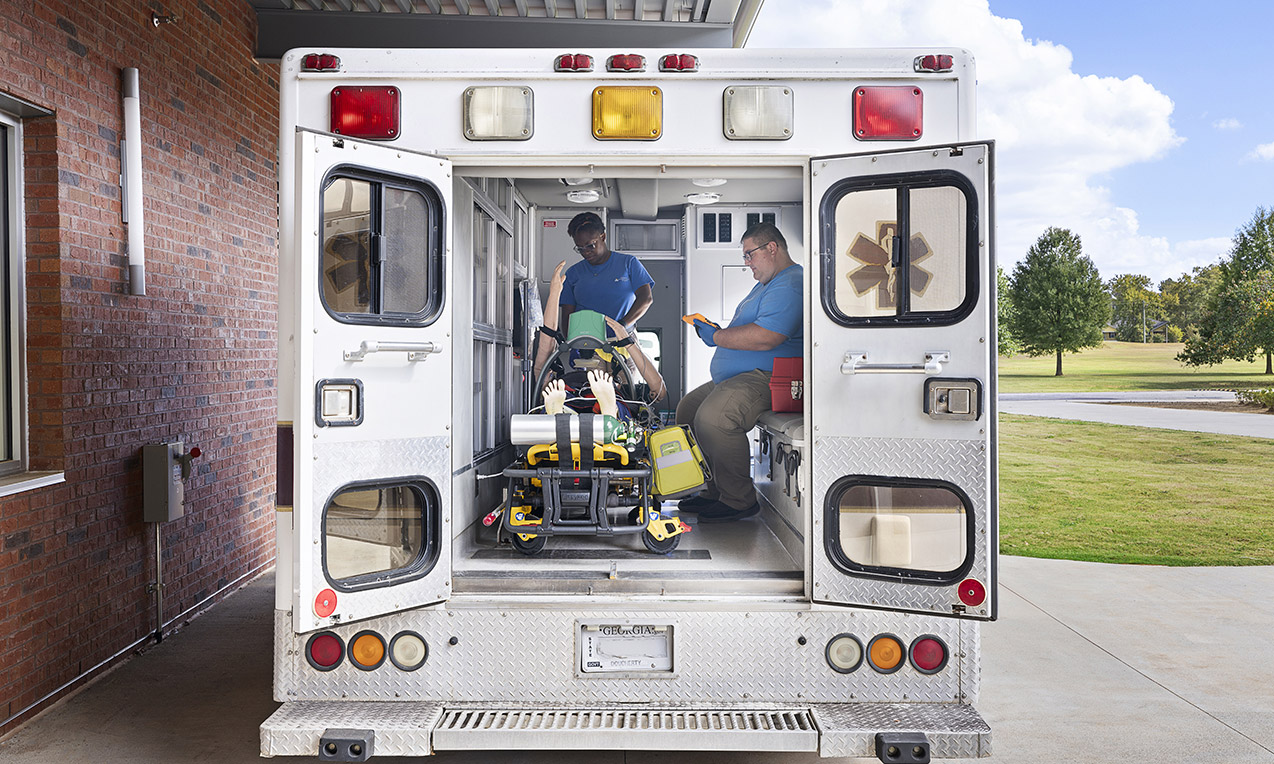
The simulated ambulance immerses learners in a realistic pre-hospital setting where experience builds confidence and prepares students to provide safe, effective care while improving patient outcomes as individuals move through the healthcare system.
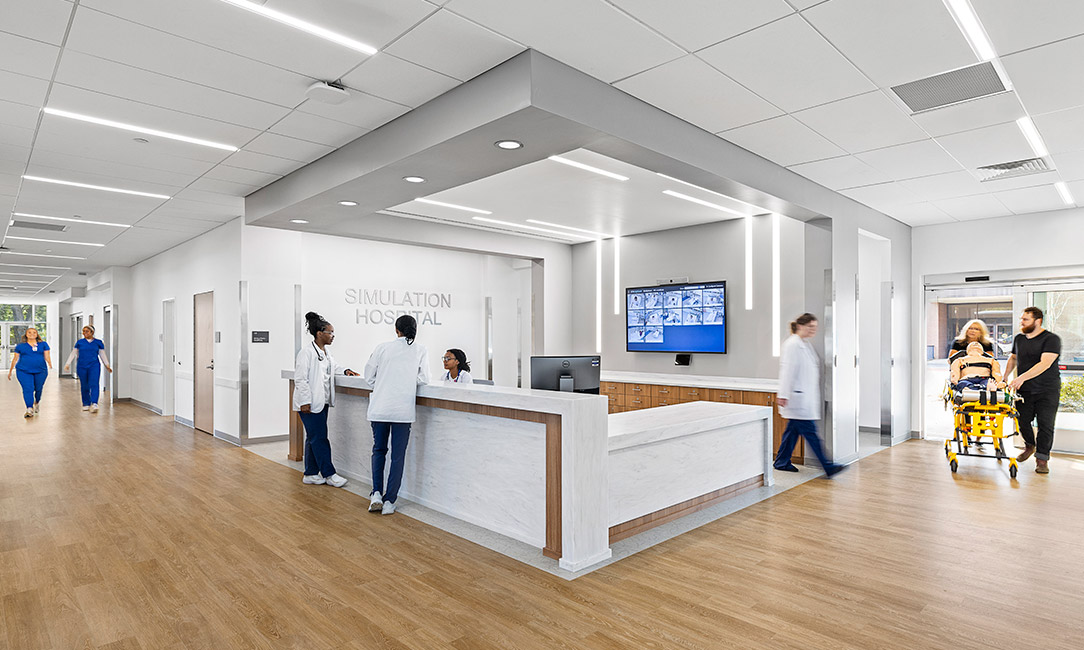
The nurse’s station reflects real clinical practice, serving as a central hub where students can manage patient flow and communicate across teams. From here, they move directly into a variety of potential simulated environments including trauma, ICU, labor & delivery, emergency, and/or patient rooms, reinforcing a seamless transition from early response to acute care, while strengthening clinical judgment in high-pressure situations.
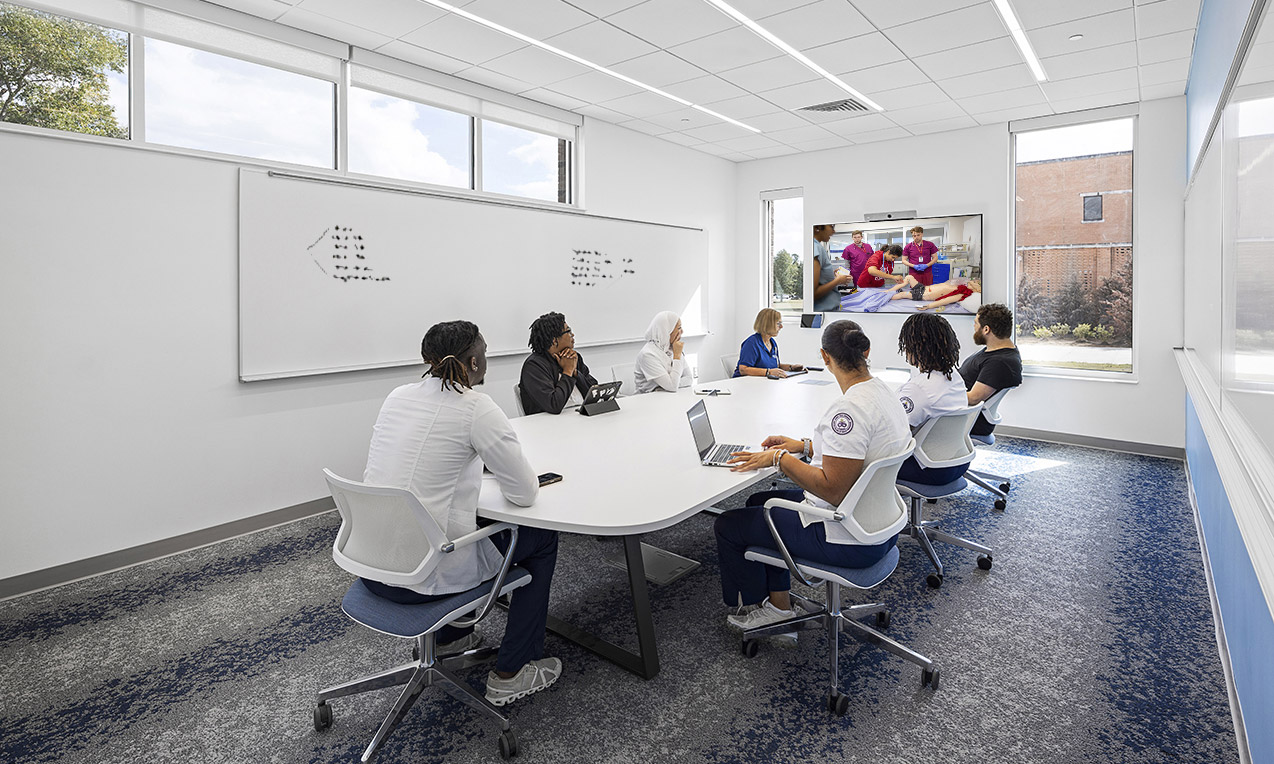
Simulation Center learning transcends replication by building confident, practice-ready professionals. Through structured pre-briefing and debriefing, students turn each experience into opportunities to think critically in high-stakes environments.
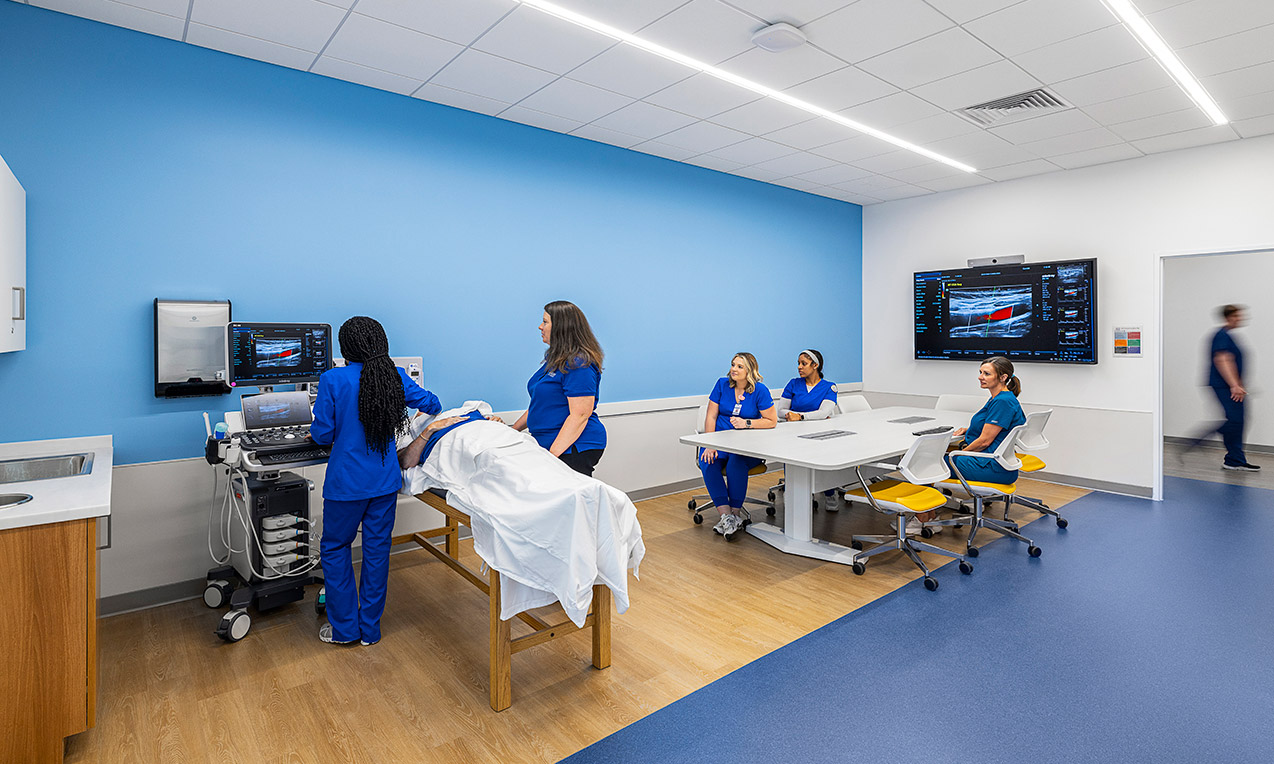
Initially designed for debriefing, the size of the room allows for more equipment and is capable of supporting multiple learning activities, including live demonstrations, a third clinical exam room, and hands-on instruction to maximize impact for all learners.
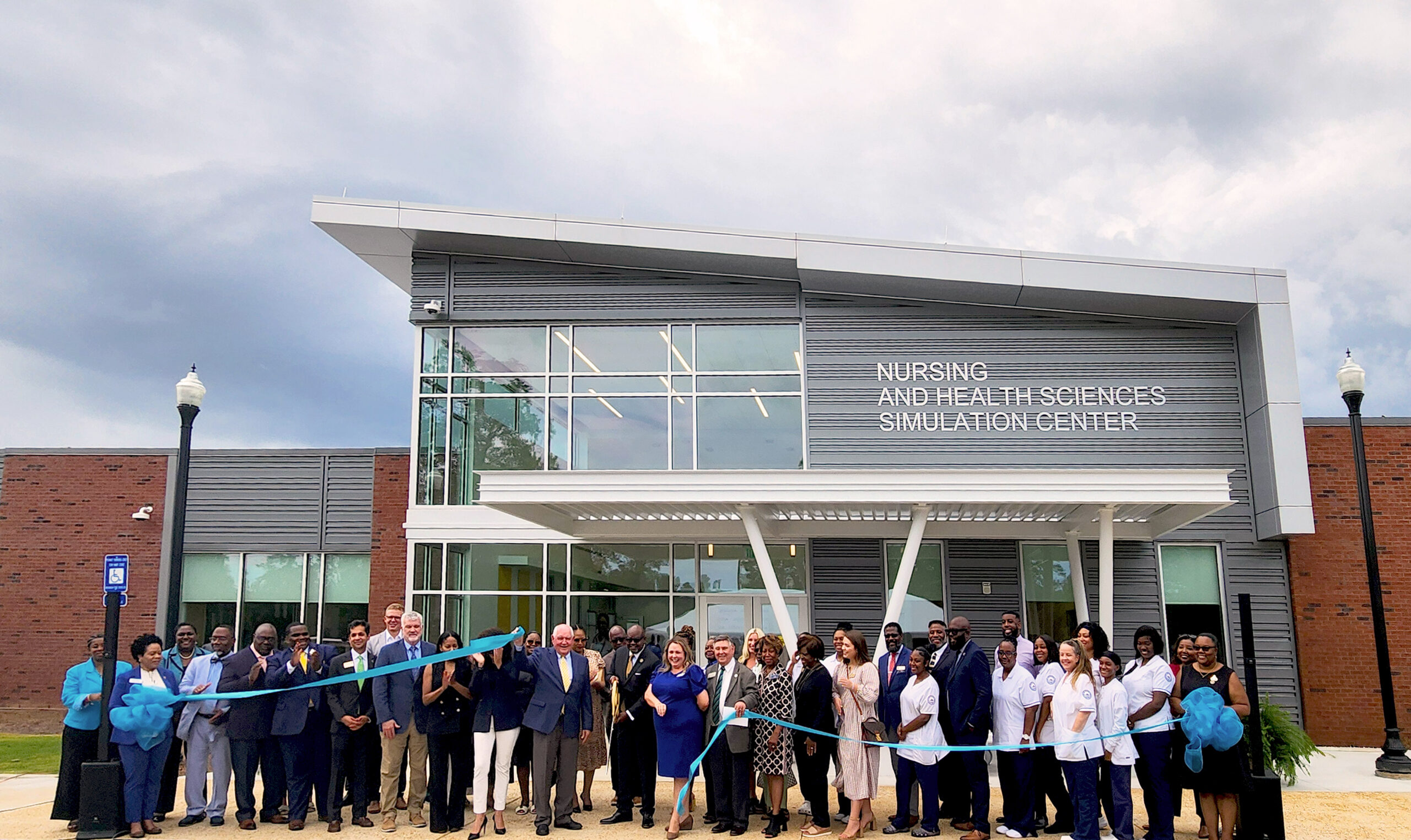
The new facility has been well received and is expected to help bolster ALSU’s rankings. The nursing program is currently ranked in the top five percent nationally and number six in Georgia.

SLAM was instrumental with their organization and the way they were able to walk us through the process. It really helped guide us and get us where we are today




![[DT logo]](https://slamcoll.com/wp-content/themes/sub151-SLAM/resources/images/dt-logo-dark.png) design thinkers blog
design thinkers blog
